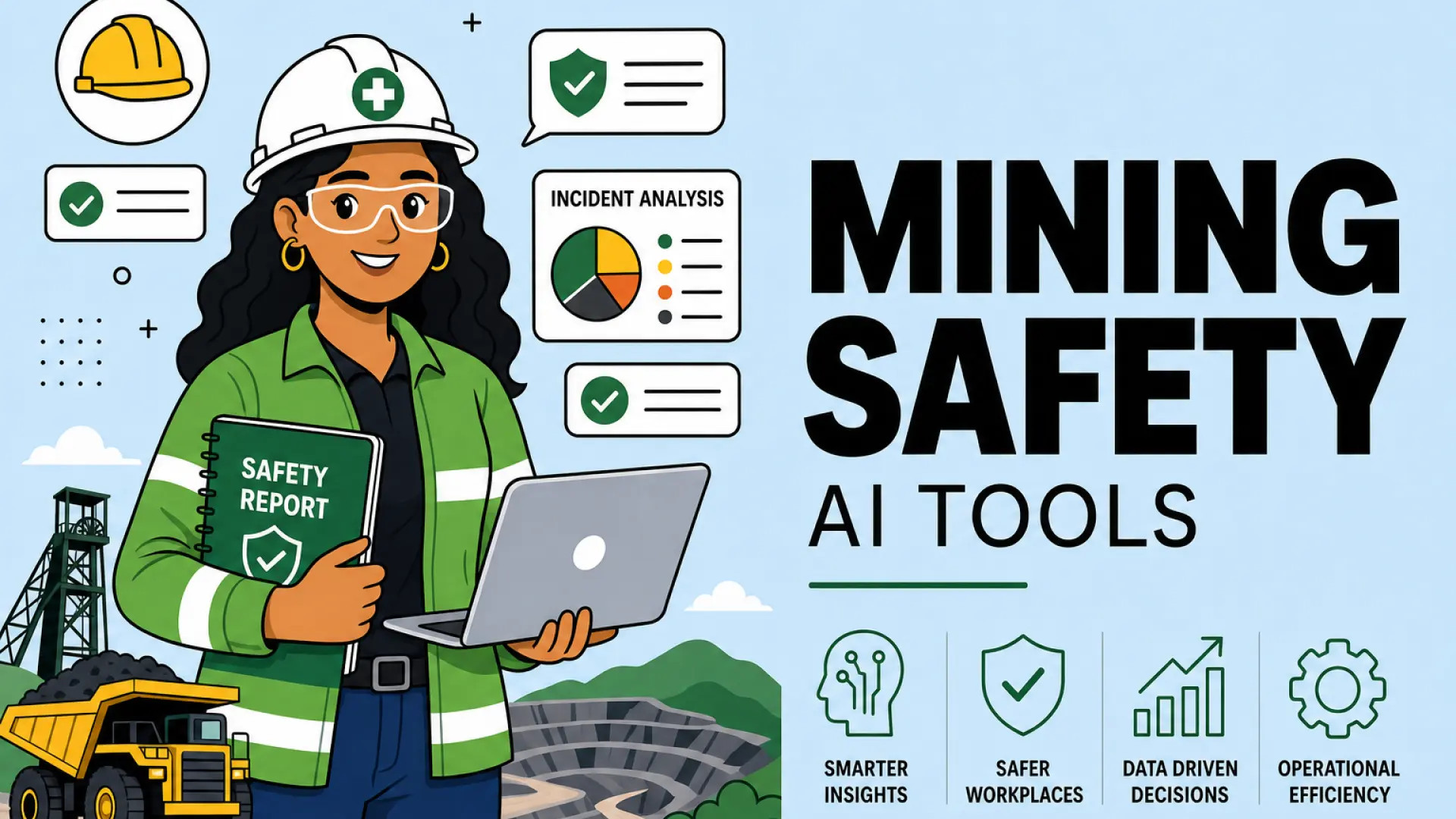
AI mining safety reporting assists with near-miss narratives, regulatory filings, and correlation of sensor data across surface and underground sites. Safety-critical industries treat AI output as draft material subject to rigorous verification, not authoritative incident reconstruction.
This guide covers near-miss and incident narrative drafting, regulatory report formats, sensor data correlation cautions, underground communications constraints, and FAQ topics on MSHA and contractor sites. Evaluate AI chatbot and AI API integrations only within air-gapped or approved enterprise environments.
Near-Miss and Incident Narrative Drafting
AI can structure first-person incident accounts from supervisor voice notes when investigators verify every fact against interviews, CCTV, and equipment logs. Incomplete or softened narratives undermine root cause analysis and expose operators to enforcement action.
- Use fixed templates aligned with company SMS and MSHA reporting categories.
- Prohibit AI from suggesting root causes before investigation team conclusion.
- Require witness review of any AI-paraphrased statements before filing.
- Timestamp draft versions as investigators add evidence during 24-hour windows.
- Train crews that AI assists formatting, not replacing honest reporting culture.
| Report type | AI assist scope | Safety officer gate |
|---|---|---|
| Near-miss card | Format bullets into narrative | Supervisor attests accuracy |
| Lost-time injury | Draft timeline from notes | Investigation lead sign-off |
| MSHA 7000-1 | Field prep only, not submission | Compliance officer files officially |
| Management safety review | Trend summary from closed cases | Verify stats against source DB |
Regulatory Report Formats
MSHA, state mining boards, and international equivalents mandate specific fields, timelines, and notification chains for serious incidents. AI must map outputs to those schemas without omitting mandatory hazard classifications or understated severity codes.
- Embed regulatory field dictionaries in prompt templates per jurisdiction.
- Alert compliance when reportable thresholds trigger automatic escalation timers.
- Separate preliminary AI drafts from official submissions in document control systems.
- Retain immutable copies of filed reports independent of AI edit history.
- Coordinate contractor vs operator reporting duties in multi-employer sites.
Sensor Data Correlation Cautions
AI correlates ventilation, gas, vibration, and proximity sensor streams to flag anomalies, but correlation is not causation in underground environments. False positives desensitize crews; false negatives hide imminent failures.
- Require human engineer review before automated shutdown recommendations.
- Calibrate models per mine geology rather than importing surface-only training data.
- Document sensor maintenance gaps that invalidate AI confidence scores.
- Never use AI summaries alone in legal defense of ventilation decisions.
- Test failover when sensor packets drop in low-connectivity headings.
Underground Communications Constraints
Many AI reporting tools assume continuous cloud connectivity that underground mines lack. Edge deployments, store-and-forward queues, and synchronized reconciliation after shift change are architectural requirements, not optional optimizations.
- Deploy on-prem or edge inference for real-time hazard assist where allowed.
- Queue AI draft reports locally until secure surface upload windows open.
- Validate that offline modes do not silently drop incident attachments.
- Train rescue teams on AI tool limitations during comms-blackout scenarios.
- Align IT security reviews with OT isolation standards for production networks.
Safety-Critical Verification Culture
Mines with strong safety cultures treat AI drafts like uncertified contractor work: useful input that earns no authority until a qualified person signs. Verification culture includes peer review, stop-work authority, and blameless reporting when AI suggestions are wrong.
- Safety committee approves AI use cases before underground deployment.
- Investigators cross-check AI timelines against black box and dispatch audio.
- Monthly drills include scenarios where AI hazard alerts fail or false alarm.
- Contractors receive identical AI policy training as operator employees.
- Executives model reporting AI errors without punitive response toward reporters.
Frequently Asked Questions
How does MSHA view AI-assisted safety reports?
MSHA evaluates accuracy and timeliness of filed information, not the drafting tool. Operators remain liable for false or incomplete reports whether AI or humans typed them. Maintain investigation integrity standards MSHA expects during inspections.
What changes on contractor-operated sites?
Contractors and operators share reporting duties under multi-employer policies. AI workflows must clarify who owns submission, data retention, and cross-company incident data sharing agreements.
Can AI replace safety inspections with predictive models?
Predictive maintenance complements but does not replace mandated walk-through inspections and statutory examinations. Document where AI recommendations diverge from inspector findings.
How should AI fatigue monitoring data appear in reports?
Worker monitoring raises privacy and collective bargaining issues separate from incident narrative AI. Consult workforce representatives before integrating biometric AI into safety reporting chains.