A city IT director wants to deploy an AI chatbot for citizen services. The vendor demo looks polished. The pricing fits the pilot budget. Then legal asks whether prompts become public records, whether the vendor trains on citizen data, and whether the product meets federal security baselines. The pilot stalls for six months while procurement catches up to a technology decision someone already made in a browser tab.
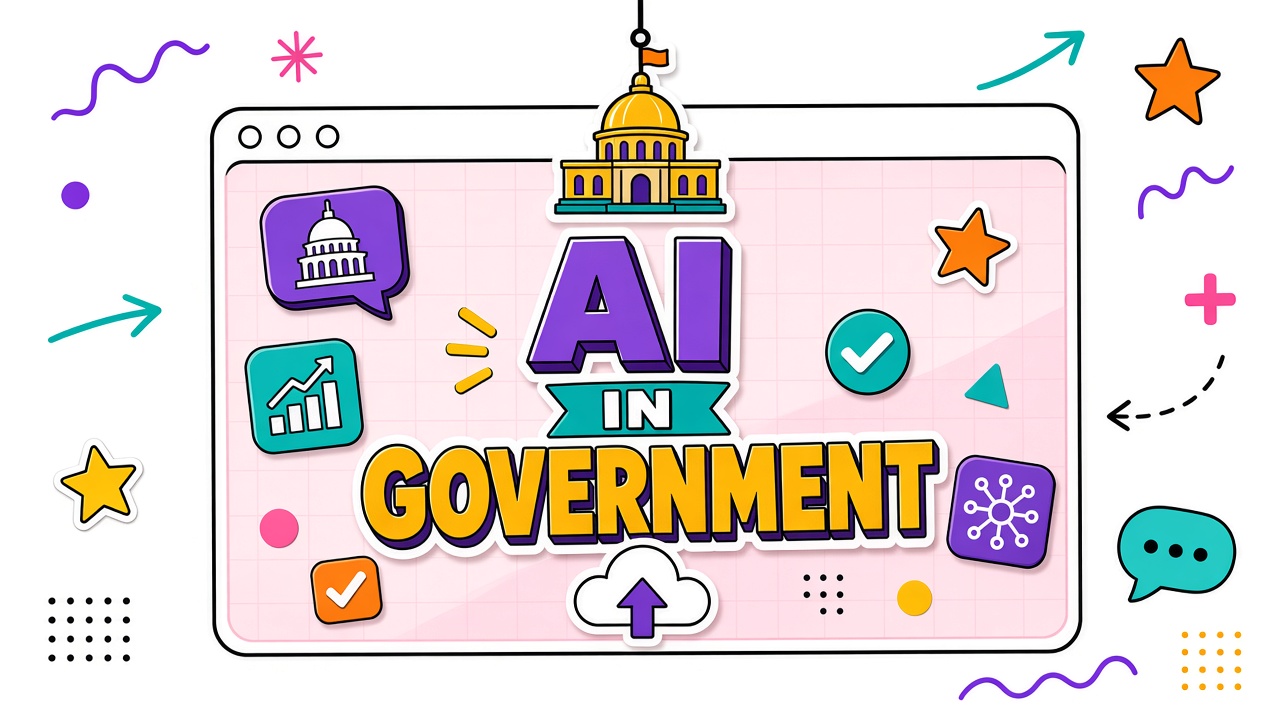
AI tools government procurement follows pathways that consumer and even many enterprise buyers never encounter: competitive bidding rules, security authorization frameworks, classification of data handled by the system, and public accountability for algorithmic decisions. This guide maps procurement stages with security gates, explains how agencies classify and protect data, covers transparency and public records implications, summarizes FedRAMP and equivalent frameworks, and outlines how pilot programs succeed in public agencies. Browse AI productivity tools and AI API platforms with these constraints before proposing a vendor to your contracting office.
Government Procurement Pathways for AI
Public agencies cannot simply purchase SaaS AI tools the way a startup swipes a corporate card. Procurement law, appropriations rules, and IT security policy determine which acquisition vehicle applies. The pathway you choose affects timeline, ceiling price, and how much security review happens before deployment.
| Procurement stage | Typical activities | Security gate |
|---|---|---|
| Needs assessment | Define use case, data types, affected populations, success metrics | Privacy impact screening, records officer input |
| Market research | RFI, industry days, GSA schedule review, open-source evaluation | Preliminary data residency and FedRAMP status check |
| Solicitation | RFP or task order with security, transparency, and audit clauses | Mandatory security questionnaire in evaluation criteria |
| Award and onboarding | Contract signature, ATO or equivalent, identity federation setup | Full authorization before production data flows |
| Operations and renewal | Usage monitoring, incident response, annual security revalidation | Continuous monitoring, change control for model updates |
Micro-purchases and pilot exceptions exist but carry low dollar ceilings and short durations. Agencies that skip the needs assessment stage often discover mid-pilot that the tool cannot handle classified adjacency data or that citizen prompts are discoverable under state sunshine laws.
Security Classification and Data Handling
Every government AI deployment starts with classifying what data the system will touch. Unclassified but sensitive information (PII, law enforcement tips, health records) often requires controls equivalent to moderate-impact federal systems even when no formal classification label applies.
- Public information: Press releases, published regulations. Lowest restriction; still document retention.
- Controlled unclassified information (CUI): Contractor data, export-controlled technical details. Vendor must demonstrate CUI handling.
- Law enforcement sensitive: CJIS-aligned controls for criminal justice data in the United States.
- Classified environments: Generally excludes commercial cloud LLMs unless air-gapped or government-approved enclaves exist.
Cloud AI vendors that accept arbitrary file uploads create a data spillage risk when staff upload documents above the authorized classification. Technical controls (DLP scanning, domain allowlists, upload blocking) matter as much as policy training.
Transparency and Public Records Implications
AI-assisted government decisions may be subject to freedom of information laws, administrative procedure acts, and algorithmic transparency ordinances. Prompts, outputs, and system logs can become public records depending on jurisdiction and retention policy.
Agencies should decide early whether AI drafts are deliberative (potentially exempt) or final agency positions (disclosable). Chat logs with citizens may be requestable within days. Vendor terms that claim exclusive ownership of prompts conflict with public records law in many states. Legal counsel should review both the vendor contract and the agency records schedule before launch.
FedRAMP and Equivalent Frameworks Overview
FedRAMP authorizes cloud services for use by U.S. federal agencies at Low, Moderate, or High impact levels. StateRAMP and similar state-level programs extend comparable review to state and local buyers. For AI tools, authorization status answers whether the vendor's security controls were independently assessed.
| Framework | Scope | Buyer takeaway |
|---|---|---|
| FedRAMP Moderate | Most federal civilian agency cloud workloads | Verify authorization package and boundary before PII processing |
| StateRAMP | State and local government cloud adoption | Accelerates security review for participating states |
| ISO 27001 / SOC 2 | Commercial security attestations | Useful but not a substitute for government authorization |
| NIST AI RMF | Risk management practices for AI systems | Framework for documenting governance, not a product certification |
Pilot Programs in Public Agencies
Successful public sector AI pilots define narrow scope, fixed duration, and explicit exit criteria before procurement completes. A 90-day pilot on a single low-risk workflow (internal FAQ for HR policies using only published manuals) builds evidence for a full solicitation without exposing citizen data prematurely.
- Secure written approval from CIO, legal, and records management.
- Use synthetic or already-public data only during the pilot window.
- Measure accuracy, staff time saved, and incident count (hallucinations, PII leaks).
- Document vendor responses to security questionnaires for the formal RFP.
- Hold a go/no-go review before expanding scope or connecting production systems.
Frequently Asked Questions
Can government contractors use commercial AI tools on agency work?
Contractors must follow agency security and data handling clauses in their task orders. Using a personal ChatGPT account on controlled data can violate contract terms and CUI rules. Agencies should publish approved tool lists and require enterprise accounts with training disabled when contractor staff process government data.
Is open-source AI safer for government deployment?
Open-source models enable local deployment and air-gapped operation, which helps with data residency. They still require patching, monitoring, and skilled operators. Security advantage depends on deployment architecture, not the license alone.
When does local deployment make sense for public agencies?
Local or government-cloud deployment makes sense when data cannot leave agency-controlled infrastructure, when network latency to commercial APIs is unacceptable, or when procurement requires full visibility into model weights and update cycles. Trade higher infrastructure cost against compliance certainty.
What extra steps apply to citizen-facing government AI?
Citizen-facing systems need accessibility compliance (WCAG), clear disclosure that responses are AI-generated, escalation paths to human staff, and logging for appeals. Algorithmic impact assessments may be required before launch in jurisdictions with AI transparency laws.