AI tools for nonprofits promise more impact per dollar: faster grant drafts, translated outreach, automated donor segmentation. The constraints are real too: small teams, volunteer turnover, donor privacy obligations, and grant restrictions on how funds are spent. Hype-driven adoption wastes the little budget nonprofits have.
This guide covers budget-conscious adoption patterns, donor and beneficiary data sensitivity, grant reporting and AI disclosure, volunteer training, and mission-aligned use cases. Start with approved AI productivity and AI writing tools that fit your data classification before expanding scope.
Budget-Conscious AI Adoption Patterns
Nonprofits should stage AI adoption by cost, risk, and reversibility. Free tiers are fine for public-content experiments; donor or beneficiary data requires paid business tiers with DPAs, even if that means fewer seats.
| Adoption tier | Cost profile | Example use cases |
|---|---|---|
| Tier 1: Free / low cost | $0-20/month | Public blog drafts, social captions, meeting agendas (no PII) |
| Tier 2: Team licenses | $15-30/user/month | Grant writing assist, internal KB search on public docs |
| Tier 3: Enterprise / API | Variable; grant-funded | Donor CRM assist, multilingual support with DPA |
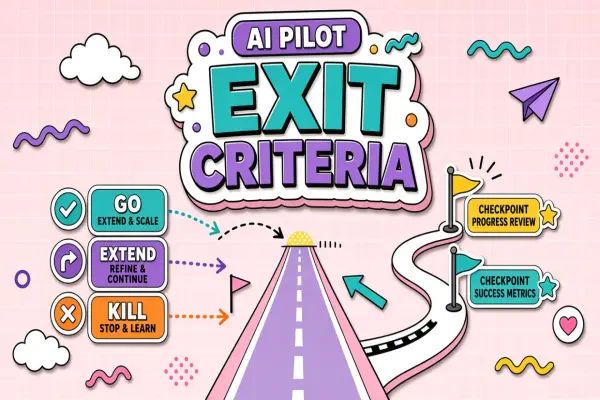
For nonprofit AI adoption, pilot one workflow for 90 days before org-wide rollout. Measure hours saved vs review time added. Cancel subscriptions that do not clear the bar.
Donor and Beneficiary Data Sensitivity
Donor records, gift amounts, and beneficiary case files are confidential even when HIPAA or FERPA do not apply. GDPR, state privacy laws, and donor expectations still restrict sharing with AI vendors. For charity AI data privacy, classify data before every prompt.
- Public: Published reports, website copy, press releases. Lowest risk.
- Internal: Strategy docs without names. Use business AI tiers.
- Confidential: Donor lists, grant budgets with identifiers, case notes. DPA required; often redact.
- Prohibited in general AI: Full beneficiary files, unredacted intake forms, payment card data.
Train staff and volunteers: personal ChatGPT accounts are not an approved place for donor spreadsheets, no matter how urgent the appeal letter deadline.
Grant Reporting and AI Disclosure
Grantors increasingly ask how AI was used in deliverables and whether funds paid for specific tools. Disclose AI assistance in reports when it materially produced outcomes, images, or data analysis cited in deliverables. Check each grant agreement for technology restrictions.
- Read grant terms for allowable software expenses and subcontracting rules.
- Budget AI subscriptions in administrative or program lines as finance directs.
- Document which outputs were AI-assisted for audit trails.
- Disclose limitations: AI summaries of field data still need human validation.
Volunteer Training on Limited Resources
Volunteers rotate; training must be short, repeatable, and policy-first. A one-page "green / yellow / red data" handout beats a 40-minute webinar volunteers will not attend twice.
- Green: public content drafting with approved tool.
- Yellow: internal docs; staff-only accounts; no personal emails.
- Red: donor or beneficiary PII; escalate to staff with DPA-covered tools.
- Include AI policy in volunteer onboarding checklist.
- Revoke tool access when volunteers leave; use SSO where possible.
Mission-Aligned Use Cases vs Hype
Prioritize AI where it removes administrative drag, not where it replaces human relationships central to your mission. For NGO AI tools budget decisions, score proposals on mission fit, data risk, cost, and volunteer burden.
Often high value for nonprofits
- First drafts of grant narratives from your own past winning applications (de-identified).
- Translation and plain-language adaptation of public health or legal explainers.
- Meeting transcription and action-item extraction on staff calls (enterprise tier).
- Donor communication personalization templates with merge fields, not live CRM paste into consumer AI.
Often low value or risky
- Automated direct messages to vulnerable beneficiaries without human review.
- Fundraising copy that invents impact statistics.
- Volunteer scheduling bots that expose home addresses in prompts.
- Expensive custom AI projects before basic CRM hygiene exists.
Budget-Tier Adoption Roadmap
- Month 1-2: Policy + one Tier 1 pilot on public content; measure time saved.
- Month 3-4: Add 2-3 staff Team licenses for grant and comms workflows.
- Month 5-6: Security review for any tool touching confidential data; sign DPAs.
- Ongoing: Quarterly review of subscriptions, usage logs, and volunteer compliance.
Frequently Asked Questions
Are free AI tiers enough for nonprofits?
Free tiers work for public-content experiments only. They lack DPAs, admin controls, and predictable data handling needed for donor or beneficiary information. Allocate grant or operating funds for business tiers when data sensitivity rises.
Can grant money pay for AI subscriptions?
Often yes as administrative or program support costs, but verify each funder's allowability rules. Some government grants restrict cloud services or foreign vendors. Document AI as a project expense in budgets and final reports.
What changes for international NGOs?
Cross-border data transfer rules (GDPR, local data residency) may restrict which AI vendors and regions you use. Field offices in multiple countries need a data map before centralizing prompts in US-hosted chatbots.
Should the board approve AI policy?
Boards should approve high-level AI use principles and data governance; staff implement procedures. Brief the board on reputational risk from AI errors in fundraising or beneficiary communications, not every tool subscription.