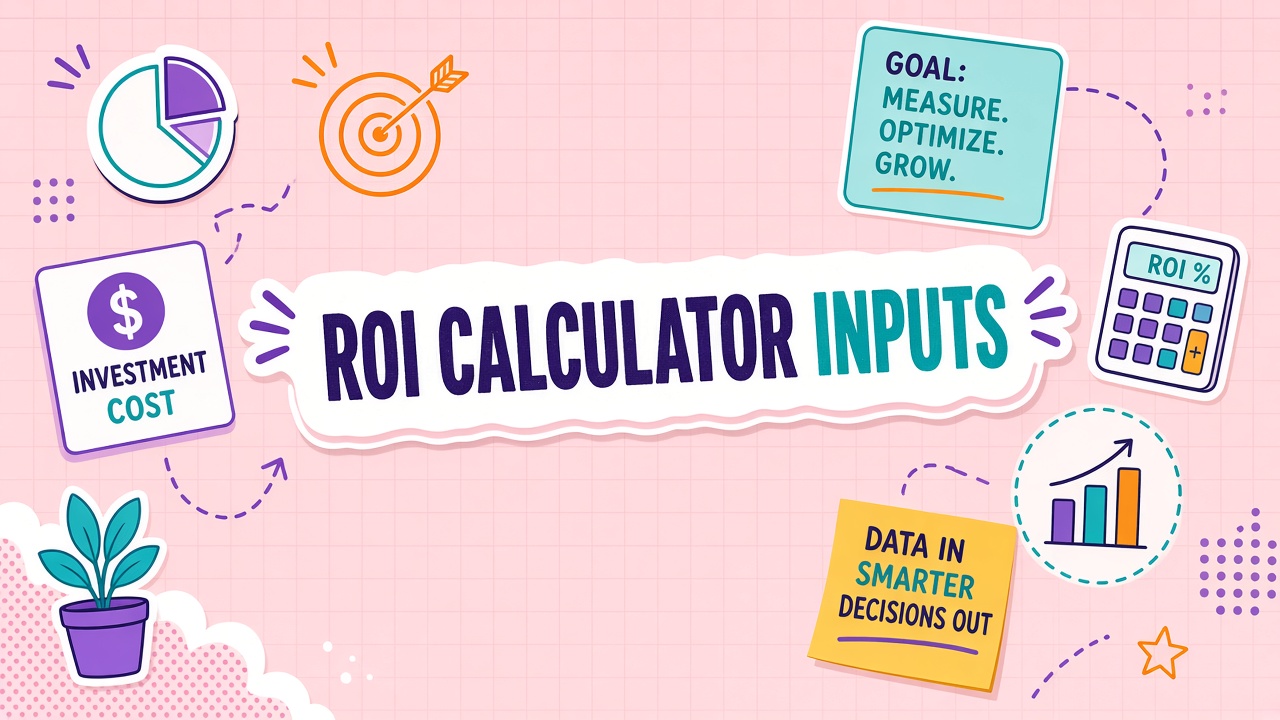
The spreadsheet shows four hundred percent ROI in year one because someone assumed every employee saves two hours daily with no review cost. Leadership approves budget; results disappoint. Honest ai roi calculator inputs separate measured time savings from tool fees, integration labor, error rework, and adoption reality.
ROI models are political artifacts and planning tools. They should stress-test assumptions, not sell vendors. Teams proposing AI code assistants and AI coding automation need input definitions finance and engineering both sign.
Labor Savings: Fully Loaded Cost and Time Study
Measure time saved on representative tasks, not self-reported enthusiasm. Run time-and-motion samples: before workflow vs after with AI assist. Use median, not best case.
Convert minutes saved to dollars with fully loaded labor rates (salary, benefits, overhead). Partial FTE savings should not assume instant headcount reduction unless hiring plan changes.
Attribute savings only to tasks AI actually touches. Whole-role savings claims without task breakdown fail audit.
Include learning curve months where net savings are zero or negative. Ramp adoption in the model explicitly.
Include Tool, Integration, and Review Labor
Costs include licenses, API overage, implementation engineering, prompt maintenance, eval harnesses, and human review of outputs. Omitting review labor is the most common ROI inflation trick.
Amortize build costs over expected benefit period. One integration sprint is not free because capitalized mentally as "sunk."
Ongoing costs: model upgrades breaking prompts, security reviews, training sessions. Add ten to twenty percent overhead line for AI-specific toil unless you measure it precisely.
Pilot Measurement Methodology Before You Model
Spreadsheet ROI fails when nobody measured the baseline. Run a structured pilot before locking inputs. Select a cohort of eight to fifteen users per role, not only enthusiasts. Include skeptics; their time savings are closer to enterprise averages than champion scores.
For each task category, record: task name, input artifacts, quality gate owner, minutes without AI, minutes with AI, and whether output was accepted, edited, or rejected. Run at least twenty samples per category before using medians in the calculator. Discard first-week numbers while users learn prompts; week two onward better reflects steady state.
Coding workflows using AI coding assistants should measure time to merged PR, not time to first suggestion. Suggestions that compile but fail review add rework; model that rework explicitly. Support workflows should measure handle time to resolved ticket with same CSAT target.
Common ROI Mistakes That Finance Rejects
Applying vendor speed claims to entire headcount. A 40% faster draft for one content type does not apply to every employee day. Counting gross savings without review labor. Legal and brand review often rise when volume rises. Treating licenses as only incremental cost. Consolidation may reduce duplicate spend; model net new spend if replacing nothing. Ignoring error rework. One bad customer email can cost more than a month of seat fees. Using 100% adoption. Voluntary tools rarely hit full weekly active use in year one.
Another failure mode is double-counting: the same hour saved claimed by support and by product because both touched the ticket. Assign savings to one owning function per workflow or finance will deflate the total in review.
Risk Cost and Error Rework
Model errors create rework, brand incidents, and compliance exposure. Estimate error rate from pilot evals multiplied by cost per incident (support tickets, legal review, customer credits).
High-stakes workflows (contracts, medical summaries, public statements) need higher error cost weighting even if frequency is low.
Subtract expected risk cost from gross savings. Net ROI may still be positive but more honest.
Sensitivity Analysis on Adoption Rate
Run scenarios at fifty, seventy, and ninety percent adoption of eligible users. Power users skew pilots; company-wide rollouts include skeptics and incompatible roles.
Tornado charts help: which inputs swing ROI most? Usually adoption and minutes saved dominate. Present low case to leadership alongside expected case.
Tie adoption to enablement budget. ROI without training spend assumes magic adoption.
| Input field | Conservative default |
|---|---|
| Eligible users | Roles with measured task fit only, not whole company |
| Adoption rate year 1 | 50 to 60% after training period |
| Minutes saved per task | Median from time study, not vendor case study |
| Review minutes per output | Measured from QA sampling in pilot |
| Error rework rate | Pilot rejection rate × rework cost |
| Tool + integration annual cost | Committed spend + 20% overage buffer |
Conservative Defaults Summary
Adoption default fifty percent unless usage data proves higher sustained weekly actives. Implementation hours times one point two five contingency. Review minutes from pilot median, not best day. Error rework at one percent of outputs unless sector requires higher. Tool spend at forecast upper quartile including overage buffer. Document every default in assumptions tab with source link or pilot date.
Building the ROI Model Structure
Tabs: Inputs, Savings, Costs, Net, Sensitivity, Assumptions Log. Inputs holds time study medians and eligible headcount. Savings calculates gross labor value. Costs stacks license, API, implementation, review, risk. Net is savings minus costs by month with adoption ramp. Sensitivity runs adoption and minutes-saved bands. Assumptions Log records source and date for every hard-coded number.
Calculate ai tool roi honestly by showing expected, low, and high cases on one slide. Leadership picks budget against low case while hoping for expected. Hide low case and you hide the real decision.
AI ROI Assumptions Workshop
Run ninety-minute workshop with finance, ops, and engineering before submission. Walk each input. Challenge any number without source. End with signed assumption list. Workshop minutes attach to business case PDF. Signatures reduce rework when CFO asks "where did this come from?"
Operational Checklist Before Submission
Confirm every savings line links to time study row with sample size. Confirm every cost line links to quote or invoice. Confirm adoption scenarios documented. Confirm error rework uses pilot rejection rate. Confirm intangible benefits listed separately from dollar numerator. Attach assumptions log PDF to business case. Name owner for quarterly refresh.
Finance reviewers scan for missing review labor and 100% adoption first. Address those proactively in cover email to speed approval.
Cross-Functional Alignment on Assumptions
Engineering validates integration hours and error rates. Finance validates loaded rates and amortization. Legal validates risk scenarios for customer-facing workflows. Product validates eligible user counts and task list. Misalignment on any one input invalidates the whole case even if spreadsheet formulas are correct.
Common Mistakes to Avoid in ROI Models
Mistake one: using vendor case study minutes saved for your entire headcount. Mistake two: omitting human review labor after AI drafts more volume. Mistake three: treating pilot champion data as company median. Mistake four: ignoring integration and prompt maintenance cost in year two. Mistake five: single-point ROI without adoption sensitivity. Mistake six: double-counting the same hour saved across two departments. Mistake seven: claiming headcount reduction without HR plan. Each mistake inflates approval odds and deflates trust when results arrive.
Metrics to Refresh ROI Inputs Monthly
Track weekly active users versus eligible users, median minutes saved per task from spot checks, review minutes per accepted output, rejection rate from QA sampling, actual tool plus API spend versus forecast, and error incidents tied to AI output. Compare to assumptions in the calculator each month during year one. When adoption lags plan, update sensitivity chart before requesting more budget. When review time rises, net savings shrink even if generation feels fast.
Share variance narrative with finance: which assumption drifted and whether workflow or tool caused it. ROI models stay credible when inputs update with measured drift, not when actuals are ignored until renewal panic.
Implementation Timeline for the Business Case
Week one: select pilot cohort and task list. Weeks two to four: time study and cost stack assembly. Week five: draft calculator with low, expected, and high cases. Week six: assumptions workshop with finance and engineering signatures. Week seven: submit business case with appendix of raw pilot notes. Post-approval: refresh inputs monthly for twelve months and attach to chargeback or renewal deck.
Skipping the workshop week produces ROI nobody will defend when CFO asks for sources. Investing in signed assumptions up front prevents rebuilding the model from memory during renewal season.
Frequently Asked Questions
How handle intangible benefits like innovation speed?
List qualitatively in appendix; do not monetize without evidence. Optional sensitivity row with wide range if leadership demands, clearly labeled speculative.
Should brand risk get a dollar value?
Use scenario analysis: probability × estimated incident cost from past incidents. Legal/comms help size ranges. Omitting entirely understates risk for public-facing AI.
Can we claim headcount reduction?
Only with workforce plan approval. Most AI ROI is capacity redeployment, not layoffs. Finance distinguishes hard savings vs soft capacity gains.
Coding assistants show huge vendor ROI stats.
Replicate with your repo, languages, and review standards. Coding gains vary wildly by codebase quality and test coverage. Vendor benchmarks rarely match your monolith.
Review this guide quarterly against your vendor admin console and finance exports. Interfaces change; caps move; new premium toggles appear inside familiar SKUs. A quarterly thirty-minute review keeps policy, forecast, and contract language aligned with what the product actually bills. Assign the review to a named role, not a mailing list.
When in doubt, measure for two weeks before committing annually or sunsetting a vendor. Short measurement windows beat long debates. Export logs, tag them, compute the metric or variance, then decide. Data ends internal stalemates that otherwise consume more payroll than the AI line item under discussion.
The Bottom Line
Business case ai tools need time-study-based savings, full cost stack, error rework, and adoption sensitivity. Conservative inputs build trust when results arrive. Fantasy ROI buys approval once; honest ROI buys renewal and smoother budget conversations every quarter. Refresh inputs when adoption or pricing shifts materially.