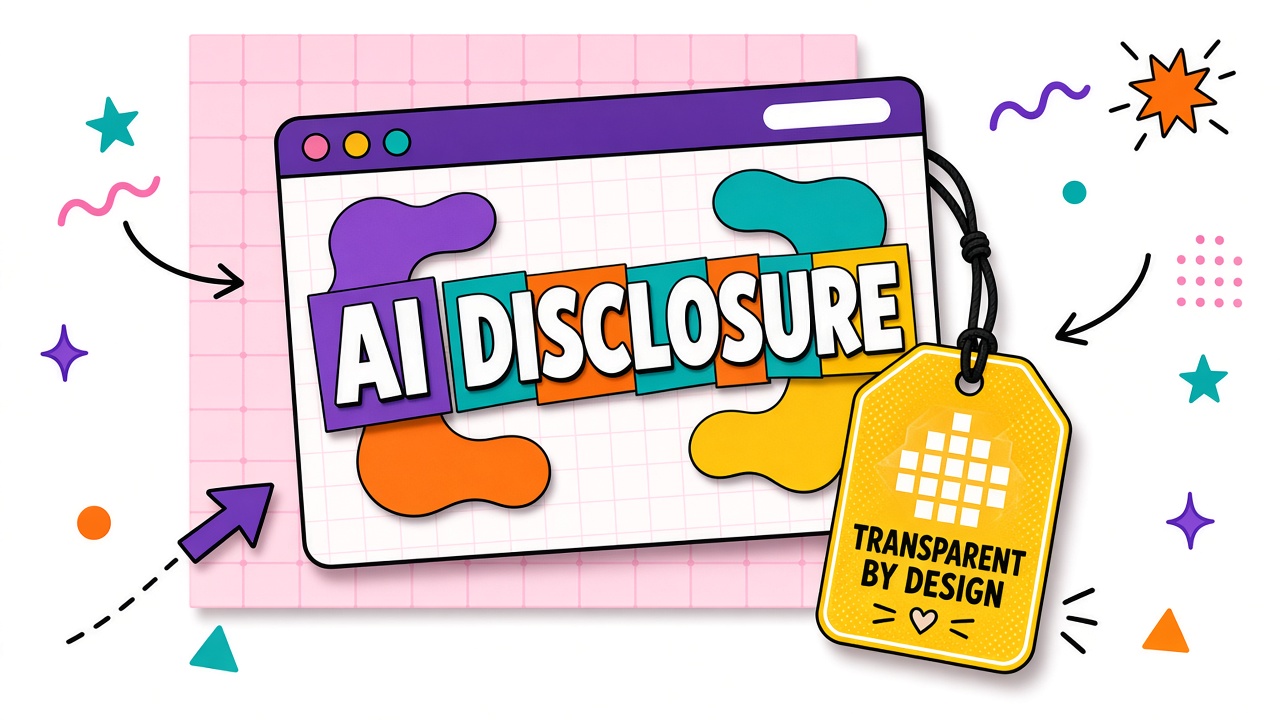
A marketing team publishes a blog post drafted mostly by an LLM, lightly edited, with no label. A support bot answers policy questions without identifying itself as automated. A designer delivers AI-generated hero images the client assumes were photographed. Each scenario creates trust risk and, in some jurisdictions, legal exposure. Disclosure is not anti-AI. Disclosure is how organizations stay credible when AI is part of the stack.
AI generated content disclosure standards vary by channel, audience, and regulation. This guide explains why disclosure matters, maps practices by context (marketing, support, internal), summarizes platform and jurisdiction requirements, provides practical wording examples, and describes workflow integration for consistent labeling. Align your policy with AI writing tools and AI image generators before scaling content production.
Why Disclosure Matters for Trust and Compliance
Users deserve to know when content is machine-generated, especially where authenticity affects decisions about health, finance, news, or elections. Disclosure reduces deception claims, sets appropriate skepticism, and helps users calibrate how much to verify before acting on advice.
Regulators in the EU, several U.S. states, and platform operators increasingly mandate labels for synthetic media and automated interactions. Proactive disclosure is cheaper than retroactive enforcement, takedowns, or contract disputes with clients who expected human-only creative work.
Disclosure by Context: Marketing, Support, Internal
One global disclaimer in the website footer is insufficient. Disclosure should appear at the point of interaction or publication, sized for the medium, and matched to how much AI contributed.
| Context | When to disclose | Example wording |
|---|---|---|
| Marketing blog | Substantial AI drafting with human edit | "This article was drafted with AI assistance and reviewed by [team]." |
| Social synthetic image | Photorealistic or misleading scenes | "AI-generated image" in caption or platform label |
| Customer support chat | First message from bot; handoff to human | "You are chatting with an automated assistant. Say 'agent' for a person." |
| Internal knowledge base | AI-summarized policy docs | "AI summary. Verify against official policy PDF dated [date]." |
| Client deliverable | Contract requires disclosure | Per SOW: "Assets include AI-generated elements listed in appendix." |
Platform and Jurisdiction Requirements Overview
Rules stack: your policy, platform terms, industry codes, and law. The EU AI Act requires transparency for certain AI interactions with natural persons. FTC guidance expects clear disclosure of material connections and deceptive synthetic endorsements. Meta, TikTok, YouTube, and LinkedIn publish synthetic media labeling requirements that change frequently.
| Source | Typical requirement |
|---|---|
| EU AI Act (deployers) | Inform users they interact with AI unless obvious from context |
| U.S. state deepfake laws | Disclosure for political and certain synthetic media in election contexts |
| Social platforms | Built-in AI labels for realistic synthetic video and images |
| Advertising standards | No undisclosed synthetic testimonials or fake user reviews |
Practical Disclosure Wording Examples
Labels should be plain language, visible, and durable through sharing and screenshots. Avoid burying disclosure in terms of service only. Prefer short labels users see before they rely on the content.
- Full AI generation: "Created with AI. Facts should be independently verified."
- AI-assisted human work: "Written with AI support and edited by our editorial team."
- AI voice or avatar: "This video uses an AI-generated voice and avatar."
- Support bot: "Automated response. Not legal or medical advice."
Workflow Integration for Consistent Labeling
Disclosure fails when it depends on individual memory at publish time. Add checklist fields in CMS, design handoff templates, and support bot configuration: AI involvement level (none, assisted, primary), approved label text, and reviewer sign-off. Marketing ops should audit a sample of published assets monthly.
Frequently Asked Questions
Do you disclose when AI only helped with outlines or grammar?
Policies vary. Many organizations disclose when AI materially speeds drafting or generates visible creative elements. Pure grammar correction on human-written text often does not require public label. Document your threshold in an internal policy and apply it consistently.
If humans heavily edit AI output, is disclosure still required?
Heavy human editing reduces misinformation risk but does not always eliminate disclosure duties, especially for synthetic images, video, or regulated industries. "AI-assisted" labels remain appropriate when AI shaped the core content.
Will disclosure hurt conversion?
Studies are mixed and context-dependent. Transparency can increase trust for B2B and regulated buyers. Test disclosure placement on your audience rather than assuming universal harm. Undisclosed AI discovered later damages trust more than upfront labels in most categories.
What about employees using AI for LinkedIn posts?
Employee advocacy programs should publish guidance: personal posts using company AI tools on company topics may need disclosure. Distinguish official brand channels (stricter rules) from individual opinions (lighter guidance, still no undisclosed synthetic endorsements).