You wake up, open an app, type a fragmented memory of falling water and a locked door, and seconds later receive a multi-paragraph reading tying symbols to stress, transition, and hidden desires. Apps like DreamAI, Lunicia, Elucid, and open-source interpreters built on Groq or Claude phrase their outputs in Jungian, Freudian, or spiritual frameworks. The experience feels personal. That feeling is part of the product design, not proof of objective decoding. This article explains how dream interpreter apps work, why the Barnum effect makes readings feel accurate, why they are not therapy, and what privacy risks follow when intimate sleep narratives enter AI chatbot backends and AI writing pipelines. Treat compelling readings as starting points for journaling, not conclusions about your mental health or clinical diagnosis.
How AI Dream Interpreter Apps Work
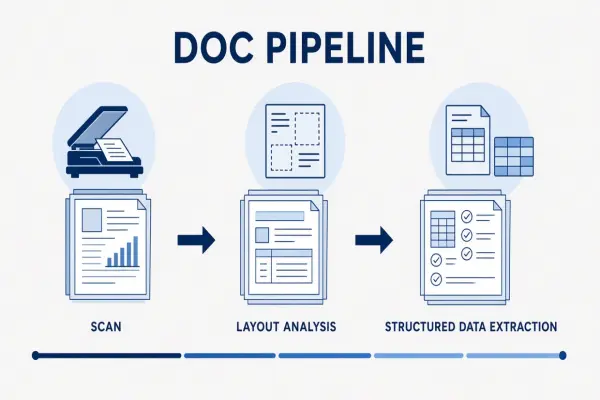
Most AI dream apps extract symbols and emotions from user text, retrieve framework-specific meanings from a knowledge base or prompt template, then use an LLM to compose a personalized narrative response. The pipeline resembles retrieval-augmented generation more than dream "decryption." DreamAI research prototypes ground responses in a symbol lexicon to reduce hallucination, then compare LLM temperature settings for symbolic, psychological, creative, and multi-scenario styles. Consumer apps like DreamAI on Google Play combine symbol extraction, emotion tagging, optional religious interpretive lenses, and reflective questions. Lunicia journals dreams over time so later interpretations reference recurring motifs.
Architecture varies. Some apps store dreams encrypted on-device; others sync to Firebase or cloud accounts for cross-device history. Premium tiers call Claude or GPT-class models; free tiers may use smaller models or show retrieved passages without LLM synthesis, as Elucid does on its free tier to keep plaintext off third-party APIs. Multi-framework products run parallel interpretive lenses (Jungian, Freudian, spiritual, humorous) so users compare tone rather than accept a single authoritative meaning.
| Component | Function | Limitation |
|---|---|---|
| Symbol matcher | Maps keywords (water, teeth, chase) to motifs | Misses novel or culture-specific imagery |
| Emotion tagger | Labels fear, joy, anxiety in narrative | Confuses narrator tone with dream affect |
| RAG knowledge base | Supplies attributed framework snippets | Frameworks disagree; none is ground truth |
| LLM composer | Writes fluent personalized interpretation | May invent citations or overfit user text |
The Barnum Effect and Why Readings Feel True
The Barnum effect (Forer effect) describes how people accept vague, broadly applicable personality statements as uniquely accurate, and LLM dream readings often exploit the same rhetorical pattern. Lines such as "you may be resisting a change you know is necessary" or "recent stress is surfacing in symbolic form" apply to large segments of any adult user base. When the app echoes symbols the user already mentioned (water, doors, falling), confirmation bias reinforces the sense of insight. Blind studies on AI-generated archive descriptions show experts struggle to distinguish AI text from human writing; dream apps benefit from an even lower evidential bar because users lack ground-truth labels for dream meaning.
DreamAI's 2025 user study found psychological interpretations emphasizing emotional relatability scored highest in pairwise comparisons, ahead of purely creative high-temperature outputs. Users wanted connection, not novelty. That preference aligns with Barnum-style empathy: readings that mirror stated feelings feel successful even without predictive validity. LLM sycophancy amplifies the effect. Models trained to please users avoid challenging interpretations that might upset subscribers. The app validates the journal entry rather than testing a falsifiable hypothesis about sleep cognition.
Not a Clinical Tool: What Psychology Actually Says
Dream content research supports roles for memory consolidation, emotional regulation, and threat simulation, but no consensus symbolic dictionary validates automated interpretation as clinical assessment. Contemporary sleep science treats dreams as heterogeneous brain states, not encrypted messages requiring decryption keys. Jungian and Freudian frameworks offer reflective lenses some therapists use in context, yet they are not standardized diagnostic instruments. Apps that cite classical sources (Bukhari, Ibn Sirin, Jung) borrow authority from tradition without controlled efficacy trials for app-delivered readings.
Responsible apps state entertainment and reflection purposes explicitly, as several store listings do. They are not substitutes for licensed mental health care, crisis lines, or sleep disorder evaluation. Nightmares linked to PTSD, medication side effects, or sleep apnea need medical attention, not symbolic reframing. Users treating app output as therapeutic guidance may delay care or interpret anxiety as mere metaphor. Clinicians report growing intake questions about "what my AI dream app said," a signal that disclosure and scope limits matter in product copy and onboarding, not only in footer disclaimers.
Data Privacy of Intimate Inputs
Dream journals contain intimate material: relationships, fears, trauma fragments, and sexual content typed into servers whose retention and training policies users rarely read. A chatbot tuned for work email is a poor model for dream data classification. Consumer app privacy policies vary. Some encrypt locally and minimize cloud retention. Others sync plaintext for personalization features that build long-term profiles marketed as "the app that knows you." Enterprise-grade data handling is uncommon in lifestyle dream products priced at subscription tiers under ten dollars monthly.
Minimize risk by using apps with on-device storage, disabling training where available, avoiding real names of third parties, and never mixing employer SSO accounts with personal dream logs. Treat dream apps like journals left on a café table if the vendor lacks strong encryption and deletion guarantees. GDPR and state privacy laws may grant deletion rights, but enforcement against small app publishers is uneven. Assume cloud-backed dream history could persist in backups after account deletion unless the vendor publishes verifiable purge procedures.
Design Patterns That Improve Honesty
Apps that attribute each claim to a named framework, show retrieved sources, and ask reflective questions instead of definitive verdicts align better with honest scope than apps promising hidden truth. Open-source interpreters that expose JSON knowledge bases let users audit which symbols triggered which paragraphs. RAG reduces fabricated Jung quotes compared with pure prompting. Multi-lens UIs remind users that interpretation is plural, not singular. Elo or pairwise rating research, as in DreamAI academic work, helps developers tune tone without claiming clinical validation.
Users seeking genuine self-understanding benefit from treating outputs as journaling prompts: "What emotion was present when the door would not open?" rather than "The door means your career block." Combine app use with licensed therapy when distress persists. AI writing skills help users rewrite app outputs into personal notes they control, stripping authoritative voice that triggers over-trust.
Cultural and Religious Lenses
Apps offering Islamic, Christian, or Indigenous interpretive lenses reflect user demand for tradition-aligned readings, but lenses are theological or cultural frameworks, not independent validation layers. DreamAI and similar products let users toggle Bukhari-influenced symbolism alongside Jungian archetypes. The UI implies parity among lenses; psychology treats them as different narrative traditions with distinct authorship rules. Users should not merge spiritual readings with clinical conclusions about mental state. Developers should separate lens outputs visually and avoid blending them into a single "official" interpretation that feels more authoritative than any single source warrants.
Sleep Science vs Symbolism
Threat simulation theory, continuity hypothesis, and memory consolidation research describe cognitive functions of dreaming without assigning fixed symbolic dictionaries to water, snakes, or flight. Apps that cite REM physiology alongside Jung often imply a bridge that peer-reviewed sleep literature does not support as a lookup table. Accurate copy distinguishes "dreams may process daytime emotional residue" from "water means unconscious renewal." The former aligns with contemporary sleep science; the latter belongs to interpretive traditions users may find meaningful as metaphor, not measurement.
Subscription Ethics and Dark Patterns
Dream apps often gate the most empathic interpretive tones behind subscriptions, nudging users to pay after a free reading that deliberately feels incomplete. Dark patterns include push notifications after nightmares, streak counters that guilt-skip journaling, and "unlock full meaning" upsells tied to anxiety-inducing dream content. Ethical products disclose subscription scope upfront, avoid urgency messaging tied to distress, and never imply that unpaid users receive dangerously incomplete psychological guidance. Entertainment framing belongs in pricing pages, not only terms of service links users never open. Journalists reviewing dream apps should ask clinical advisors whether onboarding copy matches store disclaimers; gaps there predict where users over-trust symbolic readings during distress. Treat dream apps like horoscopes with better prose: occasionally useful for reflection, never authoritative about diagnosis.
Frequently Asked Questions
Are AI dream interpretations real?
They are generated narratives grounded in symbolic traditions and your input text, not measurements of unconscious truth. They can spark reflection but do not decode fixed meanings embedded in sleep by a reliable algorithm.
Why do they feel so accurate?
Barnum statements, confirmation bias, symbol echoing, and empathic LLM tone combine to produce personal resonance. Accuracy feelings correlate poorly with predictive validity in controlled studies of similar subjective AI tasks.
Can they replace therapy?
No. They lack diagnosis, crisis intervention, and individualized treatment planning. Use them for entertainment or journaling prompts if you accept limits; seek licensed professionals for mental health symptoms.
Is my dream data private?
Depends on app architecture and vendor policy. Prefer on-device encryption, no training opt-outs honored in contract, and minimal cloud sync. Read retention and subprocessors lists before logging sensitive content.
Do Jung, Freud, and spiritual lenses agree?
No. Frameworks offer conflicting symbolic mappings. Multi-lens apps display that disagreement; single-lens apps risk false authority. None is empirically privileged for all users or cultures.
Does RAG make them scientific?
RAG reduces invented citations and anchors text to a curated lexicon, improving traceability. It does not establish that the lexicon itself is scientifically validated for individual dream prediction.
Regulators have not classified dream apps as medical devices, but advertising that implies therapeutic outcomes could attract scrutiny in jurisdictions with strict health claims rules. Store listings that say "not for diagnosis" help, yet in-app copy often softens that boundary with language about "healing insights." Users should read both marketing and settings screens. Developers should align them so the least cautious sentence is not the one users see after paying for a subscription.
Should children use these apps?
Extra caution applies. Children's dream content is sensitive, and authoritative AI tone may shape self-concept. Parental controls, local-only storage, and clear non-clinical framing are minimum safeguards if minors use journaling features at all.
Can I export dream history safely?
Export to local markdown or encrypted backups if the app allows. Avoid syncing dream journals to general-purpose cloud drives indexed by corporate search. If you switch apps, delete cloud copies on the old vendor and confirm retention policy compliance. Portable exports reduce lock-in and limit long-term exposure if a startup shuts down or changes training defaults silently.
Reflective journaling with AI writing tools you control locally can replicate much of the interpretive value without feeding sleep narratives into ad-supported mobile backends. The interpretive frame matters less than data custody when content describes fears, relationships, and health anxieties.