What is Syncari?
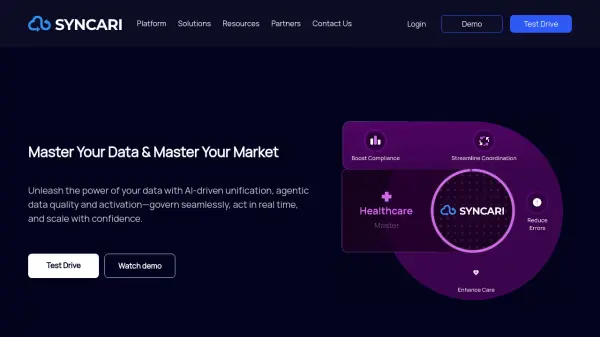
Syncari is a data automation platform modernizing master data management (MDM). The platform offers a cohesive solution to unify, synchronize, govern, enhance and access data across organizations.
Syncari's autonomous data management capabilities include multi-directional synchronization, agentic controls with AI services, and unified data pipelines. These features empower businesses to adapt to evolving needs, ensuring data consistency and quality across all connected systems.
Features
- Unified Data Hub: Centralized data repository for consistent and reliable information.
- Data Synchronization: Multi-directional sync engine for real-time data updates across systems.
- Data Management: Tools to align and govern enterprise data across multiple domains.
- Data Quality: Continuous data quality measurement and improvement across the ecosystem.
- Data Activation: Enable real-time decisions and efficient operations with reliable synced data.
- Automation: No-code interface to automate data processes.
- Reporting & Analytics: Build custom dashboards and connect to existing BI tools for data analysis.
- AI-Readiness: Leverage SyncAI to integrate AI services into data processing workflows.
- Agile MDM: Composable architecture and data fabric enabling adaptation to complex data.
- Agentic MDM: Adapt to unique business needs with AI services, automated transformations, field mapping, and schema syncing.
Use Cases
- Master Data Management
- MDM for Google Cloud
- MDM for Snowflake
- Sync Multiple CRMs
- Activate User Data
- Unified Reporting
- Embedded Sync
- Fraud Detection
- Privacy Compliance
- Cross-Team Collaboration
- M&A Integration
FAQs
-
What is a record?
A Syncari record is a unified record that contains data stitched together from multiple systems. For example, if a contact [email protected] exists in 3 systems and is unified in Syncari, it counts as 1 record, not 3 records. -
What is a Synapse?
Unlike traditional connectors, Syncari Synapses are bi-directional and deeply understand end system schemas, provide deep integration for specific operations like merge and soft-delete, and manage the impact of schema changes across every connected Synapse. Synapses are stateful integration connectors to external sources. -
What is multi-directional sync?
Syncari’s patented multi-directional sync engine empowers you to effortlessly update, transfer, and mirror data between multiple systems or databases in real-time. With Multi-directional Sync, changes made in one system are seamlessly propagated to others, ensuring your data remains consistent and up-to-date across all connected sources. -
Are automations or transactions capped?
No. Unlike other platforms that offer complicated consumption metering, Syncari keeps things simple. Syncari offers unlimited automations and transactions.