What is e2open?
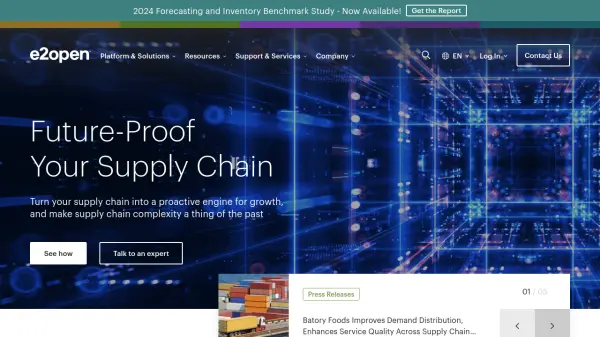
e2open offers a connected supply chain platform designed to optimize operations from the factory floor to the customer's hands. The platform provides comprehensive solutions through a unified, end-to-end software system, enabling businesses to manage their entire value chain efficiently.
The platform incorporates intelligent applications and a unified user experience called Harmony®. It leverages the world's largest network of interconnected partners (E2net) to foster collaboration across planning, supply, global trade, logistics, and channel management. The purpose-built solutions are tailored to meet the diverse needs of various industries, enhancing supply chain performance and resilience.
Features
- Channel: Visibility, collaboration, and control for optimal channel performance across all tiers.
- Planning: Connected planning across all ecosystem partners, with real-time data and field-proven artificial intelligence.
- Global Trade: Confident screening, cross-border compliance, and duty filing backed by the world’s most comprehensive trade content.
- Logistics: Connected planning and execution for efficient movement of goods across all modes, legs, and regions.
- Supply: Optimal supply through complete visibility and collaboration with all tiers of suppliers and outsourced production partners.
- Harmony® Unified User Experience: Intuitive and modern user experience, streamlined processes and workflows, and end-to-end visibility and collaboration.
- E2net Open Partner Network: Leverage the world’s largest network of interconnected partners.
Use Cases
- Enhance collaboration across all channels.
- Overcome market volatility to ensure service and capture growth.
- Minimize administration and risk of cross-border filing.
- Optimize shipping costs and deliver superior customer service.
- Meet demand fluctuations through improved supply orchestration.
- Strengthen supply assurance and meet regulatory compliance requirements.
FAQs
-
What industries does e2open serve?
e2open serves a wide range of industries, including Aerospace and Defense, Apparel and Footwear, Automotive, Consumer Packaged Goods, Food and Beverage, Freight Carriers, High Tech, Industrial Manufacturing, Oil, Gas, and Chemicals, Pharmaceutical, Retail, Semiconductor Manufacturing, Software, Telecommunications, and Third-Party Logistics. -
What is Harmony®?
Harmony® is e2open's unified user experience, providing a digital window into the supply chain. It offers an intuitive and modern interface, streamlined processes, and end-to-end visibility and collaboration. -
What is E2net?
E2net is e2open's open partner network, representing the world's largest network of interconnected partners for manufacturing, logistics and distribution.