What is arXiv Vanity?
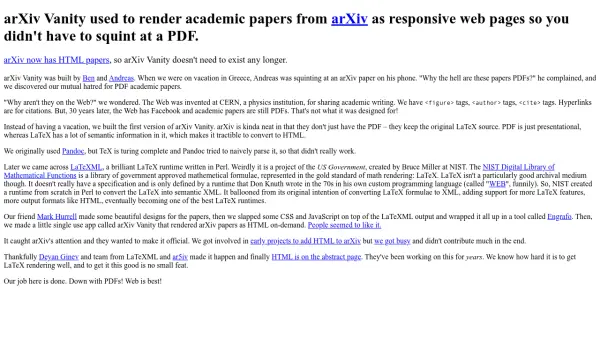
arXiv Vanity was a specialized tool designed to enhance the accessibility of academic papers from arXiv by converting them from LaTeX source into responsive HTML web pages. It addressed the common issue of poor readability when viewing PDFs on mobile devices, providing a more user-friendly web-based format. The tool leveraged LaTeXML, a LaTeX runtime, to parse semantic information from LaTeX and generate clean HTML output with custom CSS and JavaScript for optimal display.
By rendering papers as web pages, arXiv Vanity improved the reading experience with better navigation, responsive design, and semantic markup. It was built to support the academic community in accessing research more conveniently, aligning with the original vision of the web for sharing scholarly content. The tool's development contributed to broader efforts to integrate HTML rendering into arXiv, ultimately leading to its official adoption by the platform.
Features
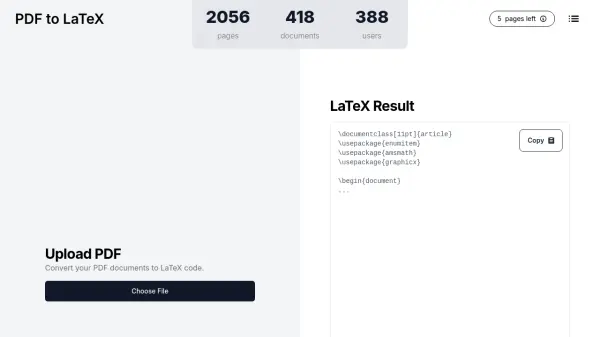
- LaTeX to HTML Conversion: Uses LaTeXML runtime to parse LaTeX source and generate semantic HTML
- Responsive Design: Renders papers as web pages optimized for mobile and desktop viewing
- Semantic Markup: Preserves structural elements like figures, authors, and citations for better navigation
- On-Demand Rendering: Processes arXiv papers in real-time to deliver HTML versions quickly
- Custom Styling: Applies CSS and JavaScript for enhanced visual presentation and readability
Use Cases
- Reading academic papers on mobile devices without squinting at PDFs
- Improving accessibility of research papers for better navigation and citation linking
- Converting LaTeX-based documents to web-friendly formats for online sharing
- Enhancing the user experience for academics and researchers browsing arXiv