What is AI Models?
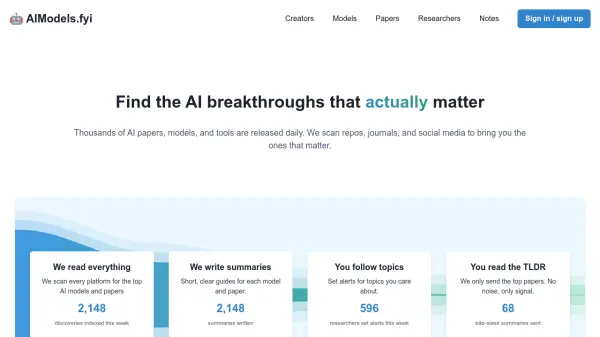
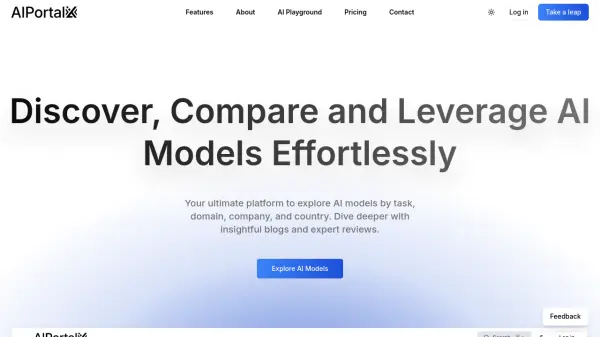
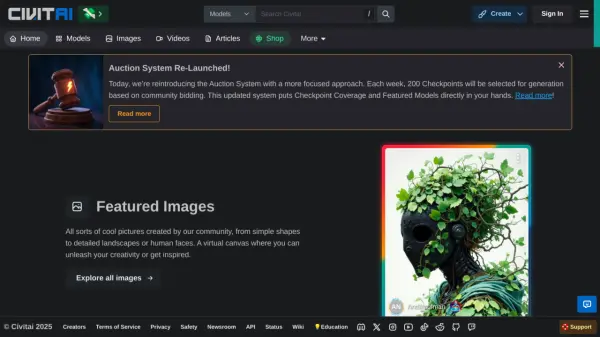
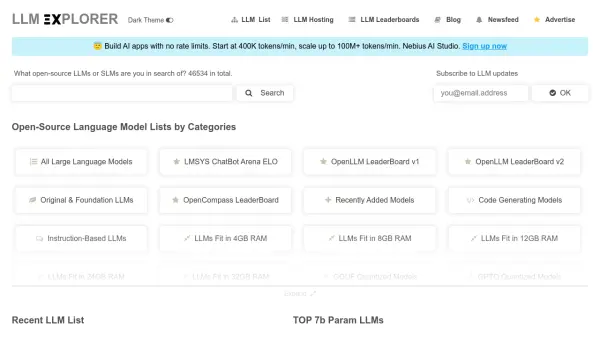
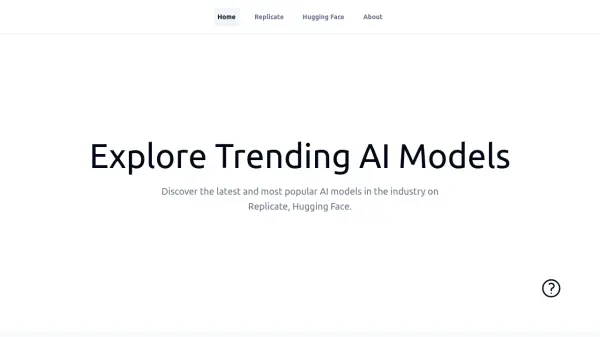
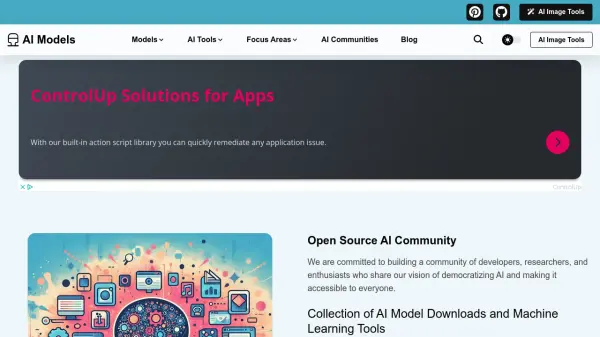
AI Models serves as a central hub for accessing a diverse range of open-source artificial intelligence models and machine learning tools. It provides resources for developers, researchers, and enthusiasts seeking to explore and utilize AI technologies. The platform features collections spanning various domains, including voice conversion (RVC), generative art, healthcare and medical imaging analysis, large language models (LLMs), and text-to-speech synthesis.
Beyond being a repository, AI Models emphasizes building a community dedicated to the democratization and ethical development of AI. It offers insights into key focus areas like open-source AI principles, AI governance, multimodal AI, and neuromorphic computing. The site aims to accelerate the AI journey for users by providing curated model downloads and relevant tools, alongside news and articles discussing advancements and considerations within the AI landscape.
Features
- AI Model Downloads: Access collections of open-source models including RVC, Generative Art, Healthcare/Medical Imaging, LLMs, and Text-to-Speech.
- Machine Learning Tools Directory: Explore tools for benchmarking, explainability, privacy, adversarial ML, data labeling, experiment management, metadata management, model serving & monitoring.
- Open Source AI Community Focus: Building a community around democratizing AI and open-source principles.
- Focus Area Insights: Articles and information on Open Source AI, AI Governance, Multimodal AI, Neuromorphic Computing, and Participatory AI.
- AI News and Blog: Updates on AI models, projects, and industry trends.
Use Cases
- Finding and downloading specific open-source AI models for projects.
- Exploring tools for various stages of the machine learning lifecycle.
- Learning about advancements and ethical considerations in open-source AI.
- Building applications requiring voice conversion, text generation, image generation, or medical image analysis.
- Staying updated on AI news and emerging technologies.
- Researching AI governance and multimodal AI concepts.
FAQs
-
What is Open Source AI and How Does It Differ from Proprietary Solutions?
Open Source AI refers to artificial intelligence projects and frameworks whose source code is freely available for anyone to use, modify, and distribute, fostering collaboration and transparency, unlike closed-source proprietary solutions. -
What are the Benefits of Using Open Source AI in Software Development?
Benefits include collaboration, flexibility for customization, cost-effectiveness (no licensing fees), community support, and transparency for validation and trust. -
How Can I Contribute to Open Source AI Projects?
Contributions can be made by exploring repositories like GitHub, forking projects, submitting pull requests, engaging in community discussions, improving documentation, testing, addressing issues, and participating in community events. -
Are There Any Limitations or Challenges Associated with Open Source AI?
Challenges include potential maintenance gaps, integration complexities, variable community support levels, and a learning curve for complex projects. -
Can Businesses Use Open Source AI for Commercial Projects?
Yes, businesses can often use Open Source AI for commercial projects under permissive licenses, but it's crucial to review specific license terms for compliance.