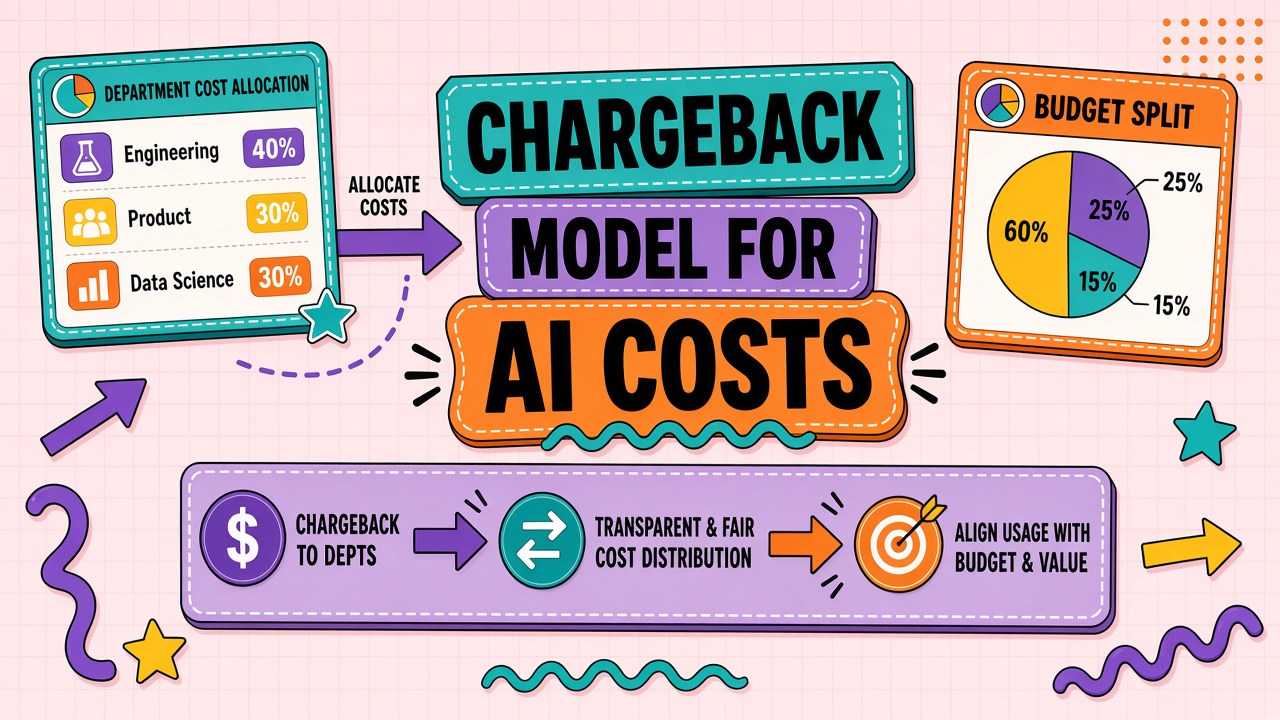
Central IT pays one AI invoice. Marketing, engineering, and support all use the platform. Without allocation, no department feels cost pressure and spend grows opaque. Ai cost chargeback departments models assign spend to cost centers through tags, fixed splits, or metered usage.
Chargeback moves budget; showback reports without moving money. Both require telemetry. Teams deploying private AI chatbots and AI automation should tag API keys and workspaces before finance asks for Q1 breakdown.
Define Cost Centers and Tags
Map organizational cost centers to technical tags: API keys, projects, workspaces, or SSO groups. Finance ERP cost center codes should appear in cloud tag naming conventions engineers already use.
Shared services (IT, platform engineering) get dedicated cost centers funded centrally, not dumped into product teams arbitrarily.
Document tag ownership: who creates keys, who approves new cost centers, what happens when teams reorganize mid-quarter.
Avoid orphan resources without tags. Default untagged spend to a central holding code that executives review weekly until attributed.
Usage Tagging in Dashboards
Vendor dashboards, FinOps tools, and internal proxies should slice usage by tag. Export daily to data warehouse for join with HR org charts if needed for validation.
Validate tags monthly: engineers copying keys between projects breaks attribution. Automate key rotation when project codes change.
Some vendors lack native tags; implement gateway that injects cost center header and logs locally. Accept small latency cost for finance clarity.
Monthly Allocation Reports
Publish monthly reports: cost center, vendor, product, usage units, allocated dollars. Showback teams see numbers without budget transfer; chargeback triggers internal invoicing or budget debits.
Include narrative for spikes: campaign, model upgrade, incident retry storm. Numbers without context breed distrust.
Align report calendar with close process. Late exports miss finance deadlines and get ignored until next quarter.
| Model | Money moves? | Best when |
|---|---|---|
| Showback | No internal transfer | Early AI adoption; building visibility habits |
| Fixed allocation | Yes, by agreed % split | Stable shared platform; usage hard to meter |
| Usage-based chargeback | Yes, by metered tags | Mature tagging; teams own product P&L |
Dispute Resolution Process
Define dispute windows and evidence standards. Teams contesting charges submit ticket with API key ID, date range, and expected tag. FinOps reruns export within five business days.
Common fixes: mis-tagged key, shared automation counted to wrong project, vendor invoice lag. Document resolutions to improve tagging policies.
Escalation path ends at finance controller for material amounts. Avoid endless email threads without decision SLA.
Showback vs Chargeback Deep Dive
Showback builds awareness without moving budget lines. Use during first two quarters of AI adoption. Chargeback moves cost to department P and L and changes behavior faster but requires accurate tags. Partial chargeback on overage only is a common stepping stone. Document transition criteria so departments know when dollars move, not only reports.
Monthly Allocation Report Template
Section one: executive summary with total spend and variance. Section two: table by cost center with tag coverage percent. Section three: top workflows by spend. Section four: untagged spend and remediation owners. Section five: disputes open and closed. Attach raw export link for auditors. Consistent template reduces finance rework.
Internal AI Billing Disputes
Disputes within five business days of report delivery. Evidence required: logs, ticket ID, tag correction PR. Platform fixes tagging bugs within SLA. Finance rules on policy exceptions. Repeat mis-tagging triggers mandatory key rotation training for team lead.
Usage Tagging Maturity Model
Level zero: no tags, central pays everything. Level one: showback with partial tags. Level two: mandatory tags on prod keys. Level three: usage-based chargeback with disputes process. Level four: automated caps tied to chargeback allocation. Advance one level per quarter maximum. Skipping levels creates finance numbers nobody trusts.
AI showback chargeback programs succeed when engineering leads co-own tagging quality, not when finance emails shame departments post hoc.
Operational Checklist
Assign a single owner for monthly refresh. Publish assumptions where finance and engineering both edit. Tie forecast or policy changes to ticket IDs. Review variance before month close, not after invoice payment. Run tabletop exercises when vendors announce pricing or deprecations. Keep archived exports for audit comparison quarter over quarter.
Document decisions in plain language any new hire can follow. Operational discipline matters as much as spreadsheet formulas or contract clauses. Teams that treat AI spend as unplannable noise get unplannable invoices. Teams that treat spend as a managed metric catch drift early and negotiate from data.
Cross-Functional Alignment
Platform owns technical tags and caps. Finance owns forecast and chargeback posting. Procurement owns contract language. Product owns workflow rollout dates that drive usage. Security owns trial data classification. Weekly five-minute sync during rollout quarters prevents each function optimizing locally while global spend drifts. Alignment is boring work that prevents exciting overage surprises.
Common Mistakes to Avoid
Mistake one: single org-wide average hiding squad spikes. Mistake two: ignoring human review labor in ROI or unit economics. Mistake three: annual commit sized on peak pilot week. Mistake four: alerts configured without owners. Mistake five: sunset without migration support. Mistake six: treating free tier as production. Mistake seven: streaming timeouts fixed by disabling streams without root cause. Mistake eight: duplicate responses patched in UI only while webhooks still double-write. Avoiding these patterns saves more than marginal token discounts.
Metrics to Track Monthly
Track spend variance versus plan, tag coverage percentage, alert acknowledgment time, dispute count, unused license count, cost per usable output where applicable, stream completion rate for customer-facing apps, and duplicate side effect rate for integrated workflows. Pick three metrics primary for your pillar; log the rest as secondary. Review trend not single points. A metric without owner and target is dashboard decoration.
Share metrics with department leads in language they can act on. Finance sees dollars. Engineering sees error rates and timeouts. Product sees adoption and quality. Same underlying data, different emphasis, one source of truth export from vendor and internal logs reconciled monthly.
Executive Summary Template
Open with one sentence on risk addressed. Follow with current state metric, target metric, and date. List top three actions this quarter with named owners. Close with decision requested: approve cap, approve contract clause, approve sunset, or approve pilot extension. Executives approve decisions, not methodology essays. Link appendix with exports for auditors rather than pasting tables into email.
Refresh executive summary monthly during volatile adoption phases; quarterly when stable. Stale summaries erode trust faster than honest bad news. If variance is unfavorable, say so early with remediation plan attached.
Stakeholder Communication
Legal cares about contract language and data handling. Finance cares about forecast accuracy and payment timing. Engineering cares about stable defaults and clear error messages. Department leads care about fair caps and usable tools. Tailor the same underlying facts to each audience without changing numbers between slides. Inconsistent numbers between teams invite shadow workarounds that defeat governance entirely.
Schedule a single source-of-truth office hour monthly where stakeholders ask questions about tags, caps, clauses, or errors. Record answers in internal wiki. Repeated questions signal documentation gaps, not stakeholder failure.
Implementation Timeline
Week one: assign owners and export baseline data from vendor admin or application logs. Week two: draft spreadsheet, policy, or runbook sections relevant to your pillar. Week three: pilot with one squad and fix tagging or alert noise. Week four: publish org-wide with office hours. Month two: first variance or true-up review and adjust assumptions. Month three: executive summary with decisions made from metrics, not only spend totals.
Skipping the pilot week creates alert fatigue and mistrust in chargeback numbers. Investing four weeks upfront pays back when finance, security, and engineering reference the same artifacts instead of rebuilding from scratch each quarter. Treat this as operational infrastructure parallel to the AI features themselves.
Finance Integration Details
Export monthly allocation CSV in format finance ERP imports: cost center, GL code, amount, memo with vendor and usage units. Automate feed to reduce manual re-keying errors. Reconcile total allocated to vendor invoice within two percent or explain variance explicitly.
Frequently Asked Questions
How chargeback shared IT platforms?
Fund centrally or allocate by headcount, revenue, or usage proxy. Do not assign entire org API bill to one product team because they requested the vendor first.
R&D experimentation spend?
Separate innovation cost center with monthly cap. Charge back to product lines only when experiment promotes to production with named owner.
When graduate from showback to chargeback?
When tags are reliable for two consecutive months and leadership wants budget accountability. Premature chargeback without tags creates political pain without behavior change.
Automation workflows span departments.
Automation jobs should carry initiating department tag even if output serves another team. Cross-charge via internal transfer rules if agreed.
Review this guide quarterly against your vendor admin console and finance exports. Interfaces change; caps move; new premium toggles appear inside familiar SKUs. A quarterly thirty-minute review keeps policy, forecast, and contract language aligned with what the product actually bills. Assign the review to a named role, not a mailing list.
When in doubt, measure for two weeks before committing annually or sunsetting a vendor. Short measurement windows beat long debates. Export logs, tag them, compute the metric or variance, then decide. Data ends internal stalemates that otherwise consume more payroll than the AI line item under discussion.
Publish a one-page quick reference alongside this guide: key terms, owner contacts, export URLs, and escalation path. Quick references get used; long guides get bookmarked once. Update the quick reference the same day any cap, tag rule, or clause changes so floor support and new hires stay aligned with finance and platform policy.
Chargeback maturity takes quarters, not days. Celebrate improved tag coverage and fewer disputes each month even before every dollar moves between departments. Progress keeps stakeholders invested in the system instead of circumventing it with shadow keys and personal cards.
The Bottom Line
Ai showback chargeback succeeds with consistent tags, monthly transparent reports, and fair dispute process. Start showback, mature metering, then move money when data supports it. Unallocated AI spend scales like unallocated cloud did a decade ago.