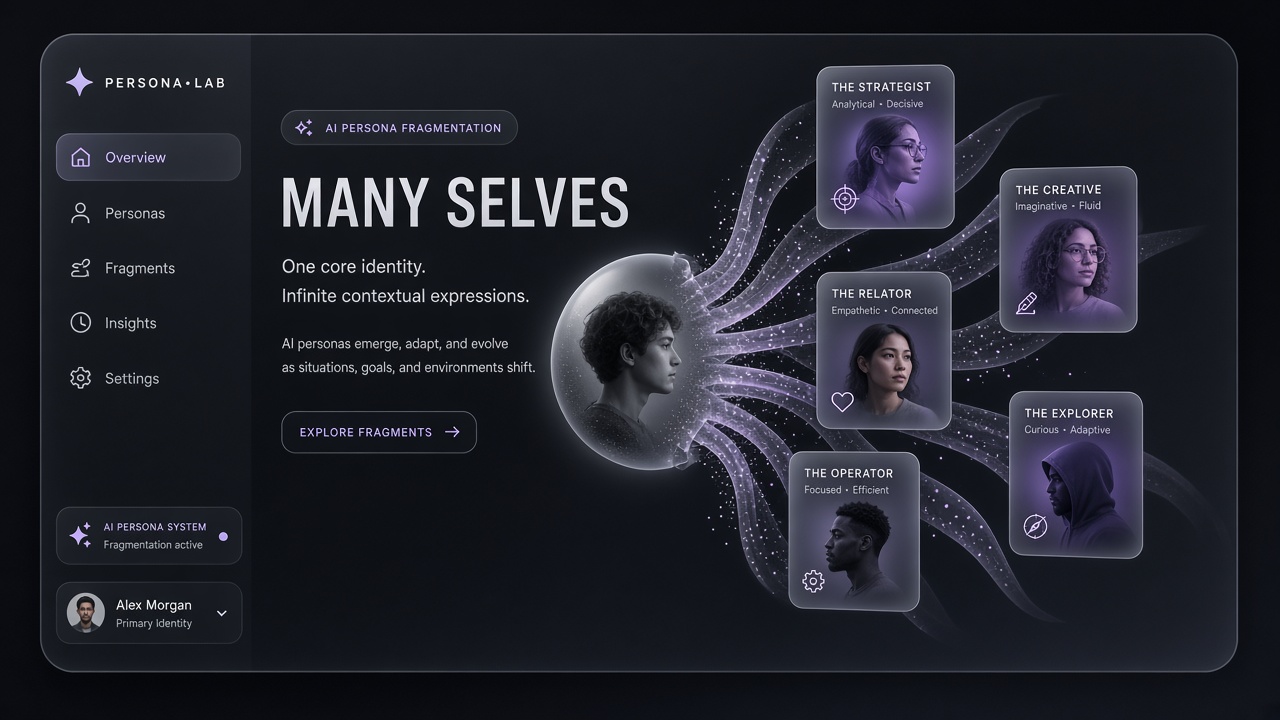
A single professional in 2026 might run a formal executive assistant in ChatGPT, a terse coding partner in Cursor, a warm creative muse in Claude, and a no-nonsense research summarizer in Perplexity. Each profile carries different tone rules, memory settings, and disclosure boundaries. That spread is not accidental. AI persona fragmentation happens because tools optimize for task-specific performance, vendors lock context inside their own platforms, and users learn quickly that one generic prompt style fails across domains. Teams evaluating AI chatbot deployments or AI productivity stacks should treat persona proliferation as a design and governance problem, not a personal quirk.
Why AI Personas Multiply Across Tools
AI personas proliferate because each tool rewards a different voice, memory scope, and risk profile, and users adapt by maintaining separate instruction sets rather than one universal profile. A legal reviewer needs cautious hedging and citation discipline. A coding agent needs repository context and permission to propose diffs. A creative writer wants expansive tone and lower refusal rates. When a single account tries to serve all three, outputs feel misaligned: the lawyer persona sounds too casual in code review, or the creative persona overstates certainty in compliance drafts.
Vendor architecture reinforces the split. ChatGPT memory, Claude Projects, Gemini Gems, and Copilot Workspaces each store context in incompatible silos. Custom GPTs, system prompts, and per-app "custom instructions" do not travel when the user switches products. Even within one vendor, enterprise tenants often block consumer memory features, pushing employees toward shadow profiles on personal accounts. The result is identity fragmentation: one human, many machine-facing selves.
| Persona type | Typical settings | Why it diverges |
|---|---|---|
| Work executive | Formal tone, calendar context, company glossary | Compliance and brand voice requirements |
| Coding agent | Repo access, test commands, concise diffs | Tool use and file permissions differ from chat |
| Creative partner | High temperature, stylistic references, no citations | Exploration conflicts with factual modes |
| Personal coach | Long memory, emotional tone, health context | Sensitive data unsuitable for work tenants |
Context Silos and Memory Walls
Context silos form when each AI product stores conversation history, uploaded files, and preference data inside a closed ecosystem that other tools cannot read. A product manager who refined a PRD brief in Claude cannot automatically import that thread into a Jira-integrated Copilot session. A developer who tuned a system prompt in Cursor does not propagate those rules to a mobile chatbot used on the commute. Users compensate by copy-pasting summaries, maintaining parallel Notion pages of "AI context," or re-uploading the same PDFs weekly.
Memory features intensify the problem. When ChatGPT remembers that you prefer bullet summaries but Claude Projects only know what you uploaded to that project, each tool builds a partial model of you. Over months, the partial models diverge. The work persona becomes authoritative in one silo while the personal persona accumulates intimate detail in another. Merging them accidentally (for example, pasting a therapy journal into a shared workspace bot) creates disclosure risk. Fragmentation becomes a privacy feature as much as a productivity limitation.
Custom Instructions Proliferation
Custom instructions proliferate because users iterate micro-prompts per task, per client, and per model version, producing dozens of semi-compatible persona fragments stored in notes apps and prompt libraries. Power users maintain spreadsheets of system prompts: "email triage v3," "Python refactor strict," "LinkedIn thought leadership warm." Each revision reflects a model update or a bad output incident. Without version control, teams rediscover the same failure modes when a new hire copies an outdated prompt from a wiki page.
Enterprise productivity suites partially centralize instructions through admin policies and approved prompt templates, but individual contributors still maintain shadow variants that perform better on niche workflows. The gap between official persona (compliant, generic) and personal persona (optimized, possibly non-compliant) mirrors shadow IT patterns from the SaaS era. Governance teams that only audit licensed seats miss the personal accounts carrying client data under alternate identities.
- Audit: Inventory which tools store custom instructions and uploaded context per team.
- Canonicalize: Publish approved persona baselines with version tags and change logs.
- Separate tiers: Define work, client, and personal persona boundaries explicitly.
- Sync summaries: Use a human-maintained context doc rather than duplicating full threads.
- Review quarterly: Retire prompts tied to deprecated models or retired clients.
Consolidation Strategies That Work
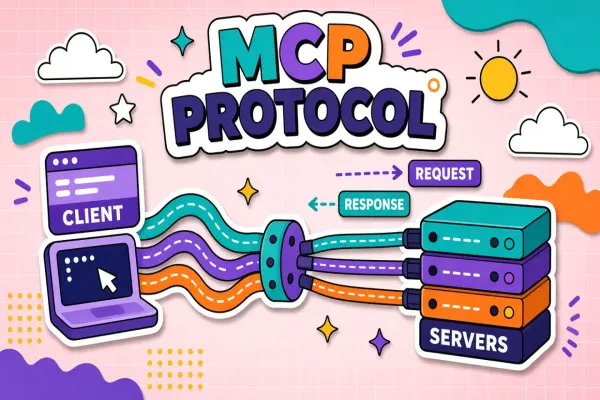
Consolidation does not mean one persona for everything; it means one source of truth for identity attributes that multiple tools can consume, plus clear rules about what must stay isolated. Practical patterns include a personal knowledge base (Obsidian, Notion, or an internal wiki) that holds role description, writing samples, glossary terms, and active project summaries. Users paste a trimmed "context packet" into any tool rather than relying on vendor memory. Some teams adopt MCP servers or enterprise gateways that inject the same system preamble across agents while keeping conversation logs separate.
Role-based personas beat tool-based personas. Instead of "ChatGPT work" and "ChatGPT home," define "analyst," "engineer," and "editor" profiles with explicit data classification labels. Map each profile to approved tools only. An analyst persona may use licensed enterprise chat with retrieval over internal docs. An editor persona may use a consumer creative tool with no client uploads. Consolidation succeeds when the organization names the personas and assigns data rules, not when it forces one tone across incompatible tasks.
Privacy Implications of Many Selves
Identity fragmentation raises privacy risk when intimate persona data lives on consumer accounts, when memory features leak context across chats, or when users confuse which profile is safe for regulated information. Health questions typed into a personal coach persona on a free tier may train vendor models depending on plan settings. Client identifiers pasted into a coding agent may appear in support logs. Multi-persona users face higher phishing value: an attacker who reconstructs persona prompts learns role, projects, and tone cues useful for impersonation.
Mitigations mirror credential hygiene. Use enterprise tenants for work data, disable training where contracts allow, turn off cross-chat memory for sensitive projects, and never mix persona context packets across classification levels. Document which personas may receive PII, financial figures, or unreleased product plans. Privacy policies written for "the AI tool" fail when employees run four tools with four identities. Update acceptable-use language to cover persona-specific rules, not just product names.
Identity Fragmentation at Work
Workplace persona splits often mirror org chart boundaries: one profile for executive communication, another for technical depth, and a third for HR-sensitive drafts. Sales teams maintain client-specific custom instructions so the model never mentions competitor names in the wrong thread. Legal teams disable memory entirely while product teams enable long-context projects stuffed with roadmaps. When these personas live on the same paid seat, accidental context bleed is common. A user who asks the work bot to "summarize yesterday's strategy call" may forget that the same session earlier contained a personal medical question pasted from notes.
IT administrators see fragmentation in telemetry: the licensed Copilot seat shows moderate usage while DNS logs reveal heavy traffic to consumer chat products. Shadow personas carry unreleased roadmap snippets because the official tenant refuses certain file types or truncates context windows. Fixing that requires better enterprise retrieval, not only policy bans. Give employees an work persona that matches the performance of their personal hacks, with logging and DLP aligned to classification labels.
Measuring Persona Debt
Persona debt accumulates when undocumented prompts, stale project files, and redundant memory entries slow every new task. Teams can score debt by counting distinct system prompts per role, average time spent pasting context packets, and incident count where wrong persona data appeared in an output. Quarterly persona audits retire prompts tied to shipped products, departed clients, or deprecated models. Without audits, new hires inherit a wiki of contradictory instructions and rebuild fragmentation from scratch.
Frequently Asked Questions
Is AI persona fragmentation bad?
Fragmentation is rational when tasks need different tone, tools, and data boundaries. Problems appear when users lose track of which persona holds sensitive context, duplicate effort across silos, or violate policy by using personal profiles for work data. Managed fragmentation with explicit rules is healthier than one overloaded persona.
Can one system prompt rule them all?
A single mega-prompt rarely performs well across coding, creative, and compliance tasks. Shared baseline instructions (name, role, formatting preferences) help, but task-specific modules should attach per workflow. Treat the base prompt as identity and add swappable task modules rather than one static block.
How do teams sync context across tools?
Maintain a short, human-curated context document updated weekly: active projects, stakeholders, glossary, and decision log. Paste relevant sections into each tool session. Enterprise retrieval layers and MCP connectors can automate injection for approved tools, but human review prevents stale or over-broad context leaks.
Do vendors fix this soon?
Partial interoperability is emerging through standards like MCP and enterprise AI gateways, but commercial incentives still favor walled gardens. Expect better connector layers before true portable persona memory. Plan consolidation around documents and policies you control, not vendor promises of universal memory.
Should companies ban multiple personas?
Blanket bans drive shadow usage. Better approach: define approved personas (roles), assign tools and data classes to each, and provide templates that outperform personal hacks. Audit for unapproved consumer accounts handling regulated data rather than policing tone preferences.
How does this relate to productivity AI?
Productivity AI suites sell unified workflows, yet users still split personas because email, calendar, code, and creative tasks need incompatible behaviors. Product leaders should design explicit persona switchers with visible data scopes instead of assuming one assistant fits all work.
Fragmentation also affects analytics. Product teams measuring "AI adoption" by seat activation miss the personal accounts where the best prompts live. Executive dashboards show low enterprise usage while delivery quality depends on shadow personas. Align metrics with approved persona channels or consciously absorb the personal optimizations into governed templates. Until then, identity fragmentation is both a user adaptation and a signal that official tools underperform on the tasks people actually run.
What is the minimum viable persona set?
How do coding agents fit persona strategy?
Coding agents need repository context, command permissions, and terse output formats incompatible with executive writing personas. Keep them on separate profiles with explicit rules about secrets: never paste API keys into consumer chat logs, never mix production credentials with experimental branches. The coding persona should reference the same canonical glossary as the work chat persona when both discuss product terminology, synced via a shared context document rather than vendor memory.
Teams evaluating AI chatbot rollouts alongside coding agents should document which persona may access which data class. Fragmentation is manageable when the map is visible; it becomes a liability when users maintain six undocumented selves and hope nothing leaks.