What is Shield Cyber?
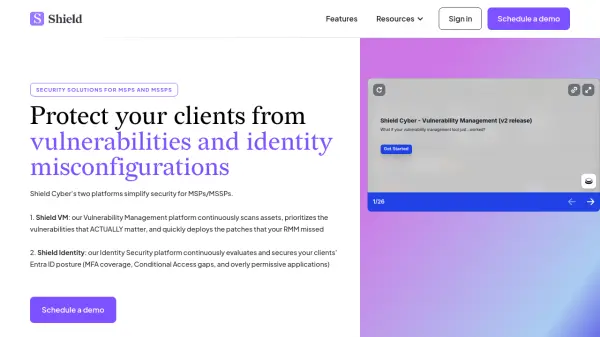
Shield Cyber offers comprehensive security solutions designed specifically for managed service providers (MSPs) and managed security service providers (MSSPs). The platform consists of two integrated components: Shield VM for vulnerability management and Shield Identity for identity security. These tools work together to provide continuous exposure management by scanning assets, identifying vulnerabilities, securing identity configurations, and prioritizing remediation efforts based on actual risk.
The platform helps organizations move beyond traditional vulnerability management by incorporating identity and access layers into risk assessment. This approach enables security teams to understand how exposures combine to create attack paths and remediate intelligently based on likelihood of exploit and potential business impact. Shield Cyber's solutions are particularly valuable for security-focused organizations looking to scale their security services while maintaining operational efficiency.
Features
- Shield VM: Continuously scans assets, prioritizes critical vulnerabilities, and deploys patches missed by RMM tools
- Shield Identity: Continuously evaluates and secures Entra ID posture including MFA coverage and Conditional Access gaps
- Instant Asset Inventory: Discovers all known, unknown, and rogue external assets and services
- Shield Exposure Index: Prioritizes critical risks on critical assets using multiple vulnerability data sources
- Auto-Grouping by Fix Type: Accelerates remediation efforts with clear guidance and mass exposure removal
- API Integration: Bridges proactive and reactive security measures by correlating security incidents
Use Cases
- Managed service providers securing client environments from vulnerabilities
- Security operations centers monitoring and responding to cyber threats
- Organizations implementing continuous threat exposure management programs
- Companies needing to demonstrate security value to non-technical stakeholders
- Security teams prioritizing remediation based on actual exploit likelihood
FAQs
-
What is the difference between exposure management and vulnerability management?
Traditional vulnerability management focuses primarily on CVEs resulting in non-actionable findings and generalized risk scores, while continuous exposure management incorporates identity layers, understands attack paths, and bridges proactive and reactive security measures for more intelligent security approaches. -
What types of organizations does Shield work with?
Shield works with organizations of all sizes, from MSPs with customers having 10 assets to Fortune 100 companies, with particular specialization in sophisticated managed detection and response (MDR) and managed security services providers (MSSPs). -
How does Shield prioritize exposures?
Shield uses the Shield Exposure Index which prioritizes critical risks on critical assets by pulling from 8+ vulnerability data sources daily to ensure up-to-date insights and focus on what is actually exploitable.