What is Pingotel?
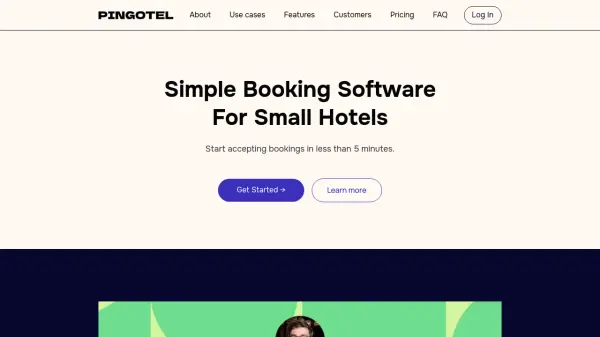
Pingotel provides a straightforward property management system tailored for small hospitality operations such as tiny houses, guesthouses, villas, glamping sites, coliving spaces, and Airbnb apartments. It offers an intuitive booking form optimized for mobile devices, unlimited room creation without per-room fees, and a private dashboard with a calendar for managing reservations. The platform integrates with Stripe for online payments, supports customizable email notifications, and allows easy rate adjustments for seasons and discounts.
Additional features include a channel manager to synchronize rates and availability across platforms like Booking and Airbnb, a website widget for embedding booking forms, and shareable booking links for direct bookings without a website. Pingotel is completely free for general use, with optional add-ons available for a fee, and is backed by a team with hospitality and software development expertise.
Features
- Booking Form: A simple, intuitive, and mobile-optimized booking form that converts well.
- Unlimited Rooms: Create as many resources (rooms, villas, cabins) as needed without per-room subscription fees.
- Calendar: A private dashboard and calendar to manage all bookings, analyze reservations on a timeline, and block dates.
- Payments: Accept online payments via Stripe integration with no additional commissions.
- Email Notifications: Customizable email notifications with details like wire transfer information to avoid online payment fees.
- Rates: Easily set up rates, seasons, and discounts for peak travel seasons, holidays, or special events.
- Channel Manager: Synchronize rates, availability, and bookings across Booking, Airbnb, and other channels.
- Website Widget: Embed a clean, responsive booking form on your website without using iframes.
- Shareable Link: Create and share booking links on platforms like WhatsApp, Instagram, or Linktree for direct bookings without a website.
Use Cases
- Managing bookings for tiny houses or small guesthouses.
- Handling reservations for luxury villas or glamping sites.
- Streamlining operations for coliving spaces or Airbnb apartments.
- Synchronizing availability and rates across multiple booking channels like Booking.com and Airbnb.
- Accepting direct bookings through embedded website forms or shareable links.
- Setting seasonal rates and discounts for peak travel periods.
- Sending customized email notifications to guests with payment details.
- Analyzing booking trends and managing a calendar for small hospitality businesses.
FAQs
-
Why is Pingotel free?
Pingotel is free because the creators believe simple booking software for small hospitality businesses should be accessible without cost, charging only for optional add-ons like Stripe payments. -
How does support work with Pingotel?
Support is provided to all users via email or LinkedIn messaging, with the team responsive to feedback and issues. -
What new features are planned for Pingotel?
New features are added selectively to avoid bloat, focusing on maintaining simplicity and usability. -
Who is behind Pingotel?
Pingotel was started by hospitality entrepreneur Peter Fabor and software developer Daniel Gavrilov, both with extensive experience in the industry.