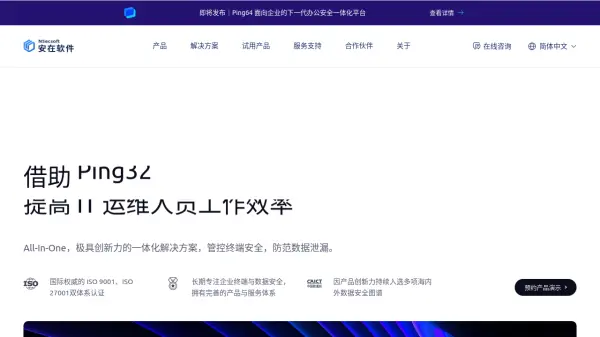
What is Ping32?
Ping32 is an integrated enterprise security platform designed to protect sensitive data and manage terminal systems through advanced AI-driven technologies. It provides a suite of solutions including document transparent encryption, data leakage prevention (DLP), user behavior analysis (UEBA), and network access control (NAC). The platform leverages machine learning and deep content recognition to monitor data flows, detect anomalies, and enforce security policies in real-time, ensuring compliance and reducing risks across various industries such as finance, healthcare, and manufacturing.
With features like intelligent content recognition, automated asset management, and cross-network file exchange, Ping32 helps organizations build robust security barriers. It supports proactive defense mechanisms, from encrypting core documents to controlling external device access, all within a unified interface. This makes it a versatile tool for IT administrators and security professionals aiming to fortify their digital infrastructure against threats and data breaches.
Features
- Document Transparent Encryption: Automatically encrypts files created by controlled programs in real-time without user awareness, decrypting upon access to prevent leaks.
- Data Leakage Prevention (DLP): Utilizes AI-driven content recognition to identify sensitive data, enforce transmission controls, and track leakage incidents for comprehensive protection.
- User Behavior Analysis (UEBA): Monitors and analyzes user activities using machine learning to detect suspicious behavior and enhance security insights.
- Terminal Security Management: Includes software compliance checks, external device control, internet behavior management, and remote maintenance to secure endpoints.
- Network Access Control (NAC): Implements 802.1X and multi-factor authentication for fine-grained port control, blocking unauthorized devices and ensuring minimal privilege access.
Use Cases
- Protecting intellectual property by encrypting sensitive documents and source code in manufacturing and R&D environments.
- Monitoring employee internet usage to prevent data leaks and ensure compliance with corporate policies.
- Securing financial transactions and customer data in banking and retail sectors to meet regulatory standards.
- Managing medical device data and patient information in healthcare settings to comply with HIPAA and other regulations.
- Controlling access to industrial control systems in energy and utility industries to prevent unauthorized network connections.