What is OpenELB?
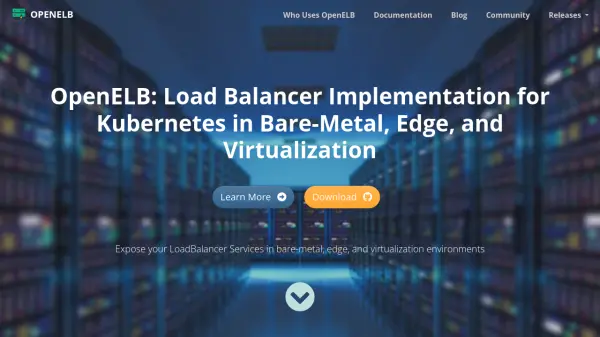
OpenELB is a load balancer implementation designed specifically for Kubernetes deployments in bare-metal, edge computing, and virtualization environments. It addresses the limitation where cloud-based load balancers, typically provided by cloud vendors, are not accessible in these non-cloud setups. By offering the same user experience as cloud-based solutions, OpenELB allows users to create and manage LoadBalancer Services for external access seamlessly.
The tool is developed as a Cloud Native Computing Foundation sandbox project, ensuring it adheres to industry standards and best practices. It supports various environments including bare-metal servers, edge computing nodes, and virtualized infrastructures, making it versatile for different deployment scenarios. OpenELB facilitates external access to services in Kubernetes clusters without relying on cloud provider-specific load balancers.
Features
- Load Balancer Implementation: Provides load balancing for Kubernetes Services in non-cloud environments
- Bare-Metal Support: Enables LoadBalancer Services in bare-metal Kubernetes clusters
- Edge Computing Compatibility: Works with edge computing nodes for distributed deployments
- Virtualization Environment Integration: Supports virtualized infrastructures for flexible setups
- Cloud-Like Experience: Offers user experience similar to cloud-based load balancers
Use Cases
- Exposing Kubernetes Services in bare-metal environments
- Managing load balancing for edge computing deployments
- Implementing LoadBalancer Services in virtualization setups
- Providing external access to applications in non-cloud Kubernetes clusters