What is LiquidSky?
LiquidSky was a GPU cloud platform that offered multi-tenant virtualization services, distinguishing itself from bare-metal solutions available at the time. It enabled users to access GPU-powered virtual machines for various applications, primarily focusing on cloud gaming and AI workloads. The platform was utilized by major companies including Verizon, Samsung, and Walmart, showcasing its reliability and advanced technology in GPU virtualization.
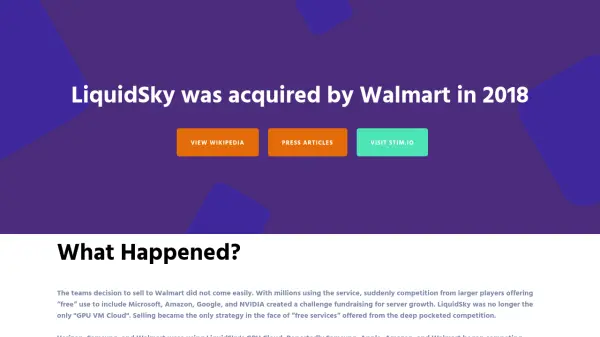
In 2018, LiquidSky was acquired by Walmart amid increasing competition from larger cloud providers like Microsoft, Amazon, Google, and NVIDIA, who began offering free or competitive services. The acquisition followed discussions with multiple tech giants, including Samsung and Apple. Some of LiquidSky's technology has since been integrated into platforms such as Xcloud, Geforce Now, and various GPU container services, continuing its legacy in cloud gaming and AI infrastructure.
Features
- GPU Virtualization: Multi-tenant GPU virtualization for cloud applications
- Cloud Gaming Support: Full Windows PC environment for installing and running any game or program
- AI Workload Capability: GPU resources optimized for AI and machine learning tasks
- Enterprise Integration: Used by major companies like Verizon, Samsung, and Walmart
Use Cases
- Cloud gaming with full PC functionality
- Running AI and machine learning applications
- GPU-accelerated virtual desktop infrastructure
- Enterprise GPU cloud solutions for businesses