What is Lexi?
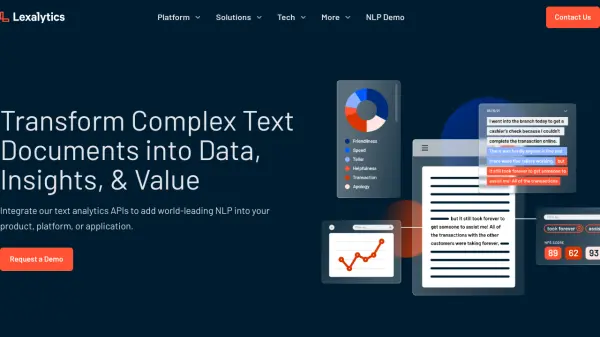
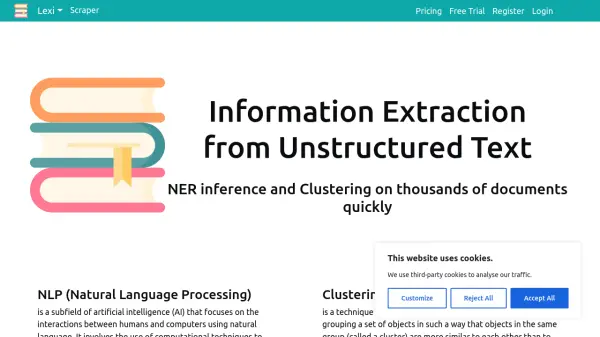
Lexi is a sophisticated natural language processing platform that combines Named Entity Recognition (NER) and clustering capabilities to transform unstructured text into valuable structured data. The platform excels at processing large volumes of documents efficiently, identifying and classifying named entities such as person names, organizations, locations, medical codes, time expressions, and monetary values.
The system leverages advanced machine learning algorithms to perform both NER inference and clustering, enabling users to not only extract specific entities but also group similar content meaningfully. This dual functionality makes it particularly valuable for organizations dealing with large-scale document analysis and information extraction tasks.
Features
- Named Entity Recognition: Identifies and classifies multiple entity types including persons, organizations, and locations
- Document Clustering: Groups similar content using unsupervised learning algorithms
- Batch Processing: Handles thousands of documents quickly and efficiently
- JSON Export: Provides structured data output in JSON format
- Flexible Upload Options: Supports both file and URL uploads
- Scalable Processing: Various capacity tiers for different processing needs
Use Cases
- Information extraction from business documents
- Legal document analysis and entity extraction
- Research paper content categorization
- Market research data processing
- Content organization and classification
- Automated data structuring from raw text
FAQs
-
What types of entities can Lexi identify in text?
Lexi can identify various entities including person names, organizations, locations, medical codes, time expressions, quantities, monetary values, and percentages. -
What is the maximum file upload size allowed?
The maximum file upload size varies by subscription tier, ranging from 1MB per upload in the PAYG S plan to 50MB per upload in the Pro 500 plan. -
What format is the extracted data provided in?
The extracted data is provided in JSON format across all subscription tiers.