What is Dumpling AI?
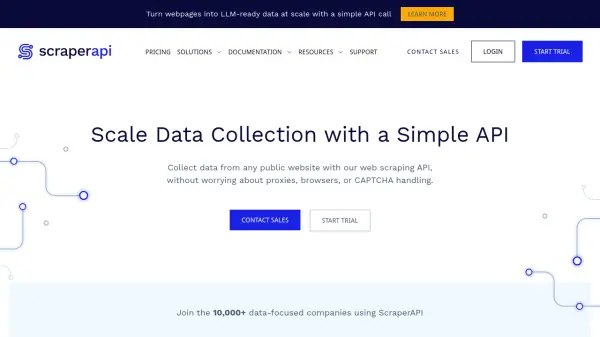
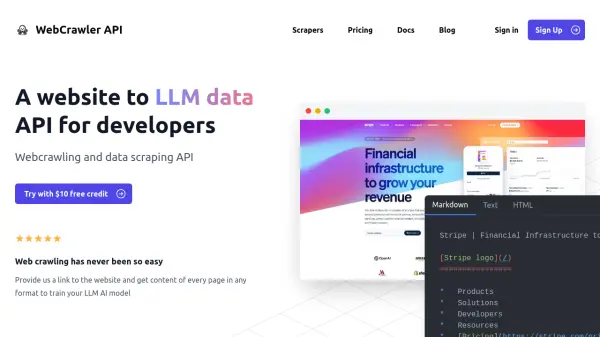
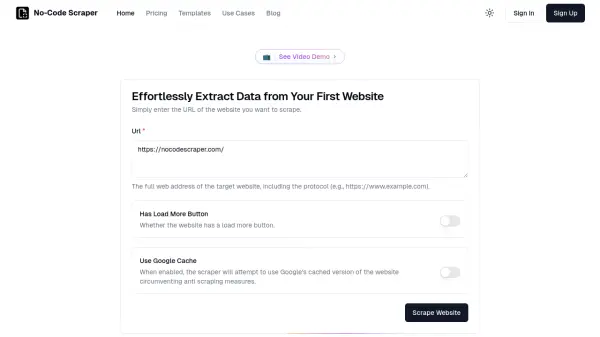
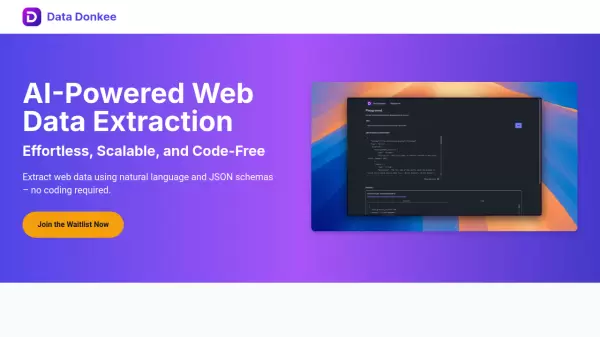
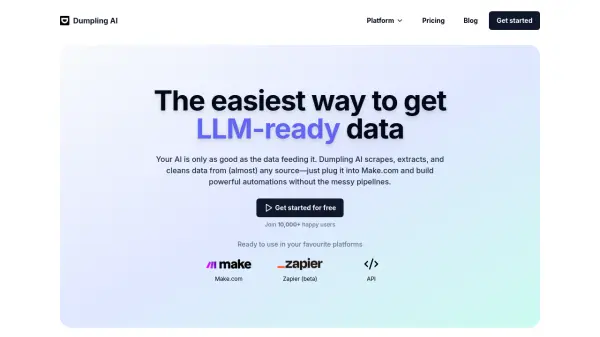
Dumpling AI facilitates the acquisition of clean, structured data suitable for AI applications and Large Language Models (LLMs). It offers capabilities to scrape websites, extract information from documents like PDFs and images, and retrieve content such as YouTube transcripts. The tool is designed to overcome challenges associated with brittle scrapers and complex data pipelines, providing reliable data extraction that adapts to changes.
Integration with no-code platforms like Make.com and Zapier (beta) allows users to build powerful automations without extensive engineering resources. Dumpling AI aims to streamline the process of sourcing and preparing data, enabling users to focus on developing AI-driven solutions by unlocking various content sources as high-quality training data or inputs for automated workflows.
Features
- Web Scraping: Reliable data extraction from websites, adapting to changes.
- Document Conversion & Extraction: Processes PDFs and images to unlock trapped data.
- YouTube Transcript Retrieval: Fetches subtitles/captions from YouTube videos.
- Google Services Integration: Accesses Google Search, Maps, Places, News, Reviews, and Autocomplete data.
- Data Cleaning: Delivers structured, ready-to-use data for AI systems.
- No-Code Platform Integration: Connects seamlessly with Make.com and Zapier (beta).
- API Access: Provides programmatic access for developers.
- Diverse Data Source Support: Handles web pages, documents, videos, and search results.
Use Cases
- Repurposing YouTube videos into SEO-optimized blog posts.
- Automating lead generation and researching prospects for personalized outreach.
- Generating high-quality content automatically, including images and links.
- Scaling social media presence through automated, customized posts.
- Preparing clean datasets for training AI models.
- Building complex data workflows using no-code automation tools.
- Extracting specific information from Google services for analysis or integration.
- Converting documents like PDFs into usable data formats for AI processing.
FAQs
-
What are credits?
Each plan provides a specific amount of credits. Different actions consume varying amounts of credits per request. -
Do subscription credits rollover to the next month?
No, subscription plan credits do not rollover into subsequent months. -
What happens if a request fails?
Dumpling AI only charges for successful requests. -
What happens if I run out of credits?
You can purchase Credit Packs (which don't expire), enable Auto Recharge to automatically buy more credits when low, or upgrade your plan. -
How do Credit Packs work?
Credit Packs can be bought anytime to supplement your plan. They never expire and are used after your regular subscription credits are consumed, ideal for handling occasional usage spikes.