What is Chyrp Lite?
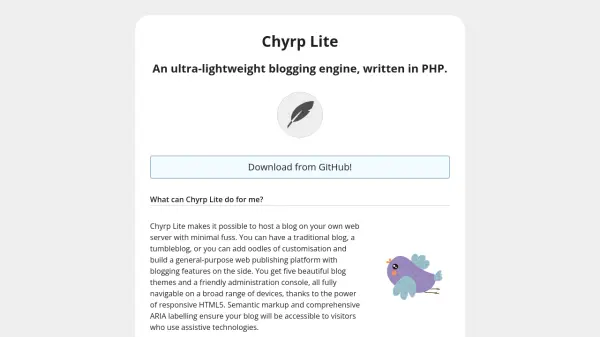
Chyrp Lite is a PHP-based blogging engine designed for simplicity and extensibility, allowing users to host blogs on their own web servers with minimal configuration. It supports various content types through Feathers, enabling traditional blogs, tumbleblogs, or custom web publishing platforms with blogging features. The platform includes five responsive HTML5 themes and an administration console that works across devices, with semantic markup and ARIA labeling for accessibility.
With a focus on development and reliability since 2014, Chyrp Lite is actively maintained to stay compatible with modern web standards. It offers features like universal text support (plain text, Markdown, or raw markup), extensibility through themes and modules, and tools for user management and webmentions. The system is built for shared hosting environments, providing a straightforward, drama-free experience for bloggers and web publishers.
Features
- Easy Installation: Simple to set up and maintain with extensible design.
- Responsive Design: Built with W3C-validated HTML5 for universal device compatibility.
- Content Flexibility: Supports plain text, Markdown, or raw markup for diverse publishing needs.
- Extensible Platform: Personalize blogs using themes and modules with the Twig template engine.
- User Management: Comprehensive rights model for managing users and visitors effectively.
- Webmention Support: Send and receive webmentions when URLs are mentioned in content.
- Feathers System: Enable different content types like text, quotes, links, and multimedia.
- Bundled Modules: Includes modules for tagging, commenting, caching, and more for enhanced functionality.
Use Cases
- Hosting a personal or professional blog on a self-managed server.
- Creating a tumbleblog with mixed media content and short posts.
- Building a custom web publishing platform with integrated blogging features.
- Developing accessible websites with responsive design for diverse audiences.
- Managing user permissions and content moderation for multi-author blogs.
- Implementing webmentions to track and engage with external references.
- Extending blog functionality with custom themes and modules for specific needs.
- Publishing static pages like colophons or hierarchical content separate from blog posts.