AudioAtlas favicon

AudioAtlas
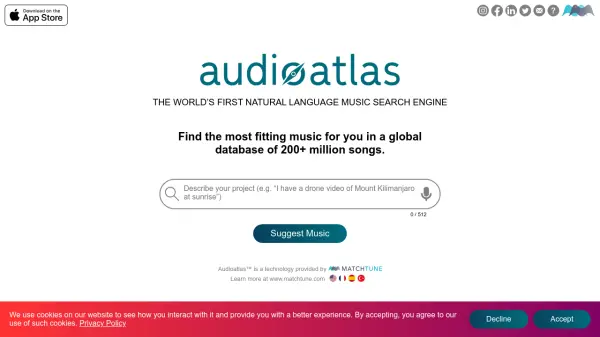
The World's First Natural Language Music Search Engine

What is AudioAtlas?

AudioAtlas represents a breakthrough in music discovery technology as the world's first natural language music search engine. The platform provides access to an extensive database of over 200 million songs, enabling users to find music that precisely matches their needs and preferences through natural language descriptions.

Powered by advanced AI technology, AudioAtlas transforms the way users search for music by allowing them to describe what they're looking for in everyday language, making music discovery more intuitive and accessible.

Features

  • Natural Language Search: Find music using conversational queries
  • Extensive Database: Access to over 200 million songs
  • Intelligent Matching: AI-powered music recommendation system

Use Cases

  • Finding background music for content creation
  • Discovering new music based on specific moods or preferences
  • Sourcing music for commercial projects
  • Creating playlists for specific occasions

Related Tools:

Blogs:

  • Best AI tools for recruiters

    Best AI tools for recruiters

    These tools use advanced algorithms and machine learning to automate tasks such as resume screening, candidate matching, and predictive analytics. By analyzing vast amounts of data quickly and efficiently, AI tools help recruiters make data-driven decisions, save time, and identify the best candidates for open positions.

  • Best ai tools for Twitter Growth

    Best ai tools for Twitter Growth

    The best AI tools for Twitter's growth are designed to enhance user engagement, increase followers, and optimize content strategy on the platform. These tools utilize artificial intelligence algorithms to analyze Twitter trends, identify relevant hashtags, suggest optimal posting times, and even curate personalized content.

  • Top 6 AI note-taking tools for 2026: in-person, online, and hybrid use cases

    Top 6 AI note-taking tools for 2026: in-person, online, and hybrid use cases

    Most AI note-taking lists are really lists of meeting bots, which join your video call and transcribe it. That's useful, but it's half the picture. Decisions happen in hallway conversations, client dinners, on-site visits, and hybrid rooms where nobody is on a video link. This guide covers different parts of the note-taking workflow: hardware capture for in-person settings, platform-native tools for online calls, and AI layers for organizing and synthesizing what you've captured. It compares six tools by capture context, workflow fit, pricing, and limitations.

Didn't find tool you were looking for?

Be as detailed as possible for better results