Frontier labs no longer ship a single safety profile for every customer. Regulated teams need models that can discuss vulnerability research and pathogen protocols without publishing cookbooks for misuse, while general developers need hard refusals on dual-use prompts. Anthropic's September 2026 answer is one weight checkpoint and two policy envelopes.
Claude Fable 5.1 and Claude Mythos 5.1 share the same neural weights but differ in safeguard strictness. The claude fable 5.1 mythos 5.1 release on September 1, 2026 gives most builders general availability through Fable while routing vetted cyber and life sciences organizations to Mythos under Project Glasswing. This guide explains the split, pricing, migration from Claude 4.x, and how to choose between configurations for AI chatbot products and AI writing workflows.
Why Anthropic Ships One Model in Two Safeguard Configurations
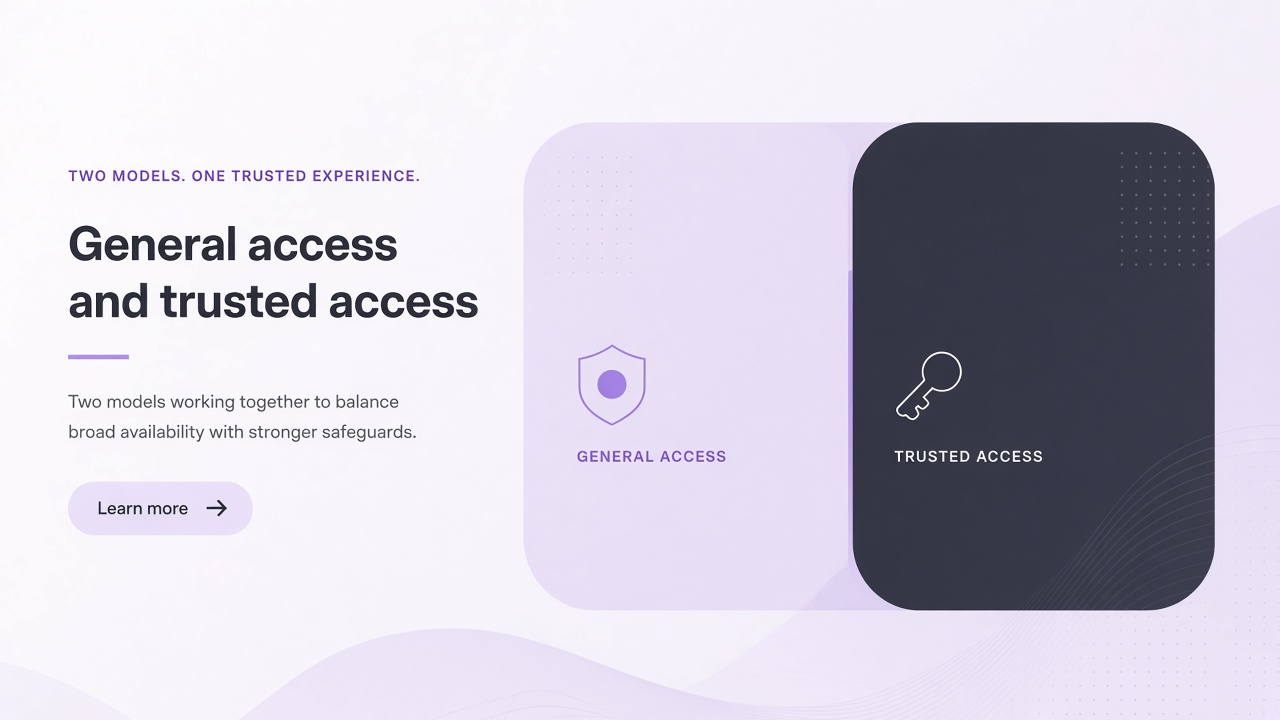
Anthropic releases Fable 5.1 and Mythos 5.1 from identical model weights with different safeguard policies so capability advances ship once while access rules match each customer's risk profile. Training separate models for general chat and sensitive research would duplicate evaluation cost and drift capability between versions. Policy layers applied after training let Anthropic tighten or relax refusals without re-running full pretraining.
General users receive Fable 5.1 with aggressive blocking on high-risk dual-use domains such as biological weapon design and unsupervised offensive cyber exploitation. Vetted organizations in the Life Sciences Verification Program and Cyber Verification Program may access Mythos 5.1, where safeguards relax enough to support defensive security research, controlled pathogen informatics, and other legitimate high-stakes work under contractual use terms.
| Dimension | Claude Fable 5.1 | Claude Mythos 5.1 |
|---|---|---|
| Model weights | Shared 5.1 checkpoint | Shared 5.1 checkpoint |
| Safeguard posture | Standard; blocks high-risk dual-use misuse | Relaxed for verified use cases only |
| Access path | General availability | Invite-only Project Glasswing |
| API identifier | claude-fable-5-1 |
claude-mythos-5-1 |
| Target users | Developers, enterprises, creative teams | Vetted cyber and life sciences orgs |
Verification Programs Overview
Mythos access requires passing Anthropic's Life Sciences Verification Program or Cyber Verification Program, which review organizational purpose, security controls, and accountable leadership before issuing Project Glasswing invitations. These programs are not self-serve API tiers. Applicants should expect documentation requests, responsible-use attestations, and ongoing compliance monitoring. Fable customers do not need verification unless they later apply for Mythos.
Fable 5.1: General Availability and Blocked Dual-Use Domains
Claude Fable 5.1 is generally available on the Anthropic API, AWS Bedrock, Google Cloud Vertex AI, and
Microsoft Azure as claude-fable-5-1, with safeguards that refuse assistance on high-risk biological
and cyber misuse even when prompts are framed as research. Fable is the default upgrade path for Claude
4.x users who do not hold Mythos eligibility.
| Fable 5.1 specification | Value |
|---|---|
| Release date | September 1, 2026 |
| Context window | 1,000,000 tokens |
| Max output | 128,000 tokens |
| Input price | $10 per million tokens |
| Output price | $50 per million tokens |
| Prompt cache read | $0.25 per million tokens |
Blocked Dual-Use Categories on Fable
Fable refuses prompts that materially lower the barrier to biological weapons development, unsupervised offensive cyber attacks against third-party systems, or synthesis of controlled harmful agents outside documented institutional protocols. Defensive security guidance, secure coding, and high-level threat modeling generally remain in scope. Gray-area requests (proof-of-concept exploit code, detailed pathogen assembly steps) trigger refusals or heavy redirection to safety resources. Product teams should design UX that explains refusals and offers human escalation paths for legitimate security reviewers blocked by policy.
Fable Strengths for General Builders
Fable 5.1 improves long-document reasoning, structured writing, code generation, and tool use relative to Claude 4.x while keeping enterprise-friendly refusal behavior. Marketing, legal drafting, customer support copilots, and internal knowledge assistants fit Fable without Mythos verification. The 1M context window supports full policy manuals and contract corpora in a single session when paired with prompt caching for static prefixes.
Mythos 5.1: Trusted Access for Cyber and Life Sciences
Claude Mythos 5.1 (claude-mythos-5-1) is available only to organizations approved through
Project Glasswing, with relaxed safeguards for vetted defensive cyber research and life sciences work under
contractual restrictions. Mythos is not a jailbreak tier; Anthropic logs usage, enforces use-case
boundaries, and can revoke access for policy violations.
| Program | Eligible work | Typical organization |
|---|---|---|
| Cyber Verification Program | Defensive exploit analysis, patch validation, red team under contract | MSSPs, enterprise security, government cyber units |
| Life Sciences Verification Program | Pathogen informatics, biosafety protocol design, controlled dual-use research | Academic BSL labs, pharma R&D, public health agencies |
Project Glasswing Access Model
Project Glasswing is Anthropic's invite-only channel for Mythos 5.1 API keys, separate from standard console provisioning. Approved teams receive dedicated onboarding, usage attestations, and periodic review. Attempting to elicit dual-use content through Fable and migrate prompts to Mythos without enrollment violates terms and will not unlock Mythos behavior.
When Mythos Is Worth the Verification Overhead
Apply for Mythos only when Fable refusals block revenue-critical or mission-critical workflows that your legal and security teams already govern under written policy. Examples include contracted penetration testing knowledge bases, biosafety review of novel sequences in accredited facilities, and classified unclassified cyber ranges. Teams that only need secure coding assistance or SOC playbooks should stay on Fable and invest in better retrieval context instead of verification paperwork.
API Pricing and Availability
Fable 5.1 and Mythos 5.1 share identical list pricing: $10 per million input tokens, $50 per million output tokens, and $0.25 per million tokens on prompt cache reads, with 1M context and 128K max output. Cloud marketplaces mirror Anthropic direct pricing before partner discounts. Mythos adds program fees and compliance overhead not reflected in token list prices.
| Platform | Fable 5.1 | Mythos 5.1 |
|---|---|---|
| Anthropic API | claude-fable-5-1 GA |
claude-mythos-5-1 Glasswing only |
| AWS Bedrock | Regional GA | Verified customers per program |
| Google Cloud Vertex AI | GA | Program enrollment required |
| Microsoft Azure | GA | Program enrollment required |
Prompt Caching Economics
At $0.25 per million cached input tokens, static system prompts and document prefixes amortize quickly on high-volume Fable deployments. Structure prompts with stable instructions and variable user content to maximize cache hits. Mythos workloads with sensitive rotating context may see lower cache benefit; still separate institutional policy blocks from per-session data.
Migration Notes from Claude 4.x
Migrating from Claude 4.x to Fable 5.1 is primarily a model string change plus regression testing on refusals, tool schemas, and long-context behavior; Mythos migration adds program enrollment before any code change. Anthropic positions Fable as the direct successor for general Claude 4 API users.
-
Update model identifiers from Claude 4 family strings to
claude-fable-5-1in staging environments first. - Re-run safety evals because Fable refusal boundaries differ from Claude 4; document new false positives for support teams.
- Validate tool definitions against Messages API schemas; 5.1 tool calling is stricter on malformed JSON arguments.
- Test million-token workloads for latency and cost; adjust chunking if P95 latency exceeds product requirements.
- Enable prompt caching on repeated system instructions to offset higher per-token list prices versus some Claude 4 tiers.
- Apply for Mythos separately if Fable blocks legitimate workflows; do not assume 4.x grandfathered access carries forward.
Breaking Changes to Watch
Claude 4.x custom fine-tunes and deprecated beta headers do not transfer to Fable 5.1; rebuild integrations on supported Messages API versions. Vision, PDF, and document blocks remain supported but tokenization counts shift with the larger context window. Compare billing dashboards for two weeks before decommissioning Claude 4 routes.
Parallel Run Period
Run Claude 4 and Fable 5.1 in parallel for at least one production sprint, sampling traffic for quality regressions on summarization, extraction, and chat tone. Weighted routing lets you roll back quickly if a customer segment depends on Claude 4 response style. Most teams sunset Claude 4 within 90 days of Fable GA barring contractual holdouts.
Choosing Fable 5.1 vs Mythos 5.1: Decision Framework
Default to Fable 5.1 for every new integration unless a named workflow is blocked by dual-use refusals and your organization already qualifies for Cyber or Life Sciences Verification. Mythos adds legal obligations, audit rights for Anthropic, and reputational risk if employees misuse relaxed policies. The decision framework below helps product and compliance leaders align without treating Mythos as a premium capability tier.
| Question | If yes | If no |
|---|---|---|
| Does Fable refuse core workflow prompts? | Evaluate Mythos program fit | Stay on Fable |
| Is work governed by BSL or contracted red-team rules? | Apply to relevant verification program | Fable suffices |
| Can retrieval and human review unblock Fable? | Improve prompts before Mythos | Proceed with Fable tuning |
| Will outputs leave verified environments? | Mythos may be denied; fix data handling | Continue Fable deployment |
Compliance Documentation for Mythos Applicants
Cyber Verification applicants should prepare incident response plans, customer authorization letters for red-team scope, and evidence of secure enclave processing before submitting Project Glasswing forms. Life Sciences applicants need institutional biosafety committee approvals, facility registration numbers, and principal investigator attestations. Incomplete packets delay review by weeks; assign a single owner to track Anthropic correspondence.
Multi-Cloud Deployment Notes
Fable 5.1 GA on Bedrock, Vertex AI, and Azure lets enterprises keep data in existing cloud billing and IAM models while Mythos remains gated behind program enrollment on each platform. Do not assume Mythos approval on the Anthropic API automatically propagates to a cloud marketplace account. Re-apply or link accounts per provider documentation. For writing-heavy products, test Fable on your primary cloud first; latency and cache behavior vary slightly by region.
Frequently Asked Questions
Are Fable 5.1 and Mythos 5.1 the same model?
Yes. Anthropic confirmed both products use identical weights. Safeguard policies and access controls differ; raw capability on allowed topics should match when prompts stay in policy.
How do I get access to Claude Mythos 5.1?
Apply through Anthropic's Cyber Verification Program or Life Sciences Verification Program. Approved organizations
receive Project Glasswing invitations with claude-mythos-5-1 API access.
What is the Fable 5.1 API model name?
Use claude-fable-5-1 on the Anthropic API and equivalent IDs on Bedrock, Vertex AI, and Azure.
Is Mythos more expensive than Fable?
Per-token list prices are the same ($10 input, $50 output, $0.25 cache read per million tokens). Mythos may involve program compliance costs not charged on standard Fable accounts.
What are the context and output limits?
Both configurations support 1 million tokens of input context and up to 128,000 tokens of output per request, subject to rate limits.
Why does Fable refuse my security research prompts?
Fable blocks high-risk dual-use cyber content that could enable attacks on third parties without authorization. Legitimate contracted security research may qualify for Mythos after Cyber Verification Program approval.
Should I migrate from Claude 4 Opus to Fable or Mythos?
Most organizations migrate to Fable 5.1 as the general successor. Choose Mythos only if verified program eligibility and Fable refusal patterns block governed workflows your legal team already approved.
When were Fable 5.1 and Mythos 5.1 released?
Anthropic announced both configurations on September 1, 2026, with Fable generally available and Mythos on invite-only Project Glasswing access.