The AI kickoff town hall was six months ago. Policy lives in a PDF nobody opens. Champions still share tips in private Slack threads while everyone else assumes AI is "handled by IT." Adoption stalls not from lack of tools but from lack of steady internal communication.
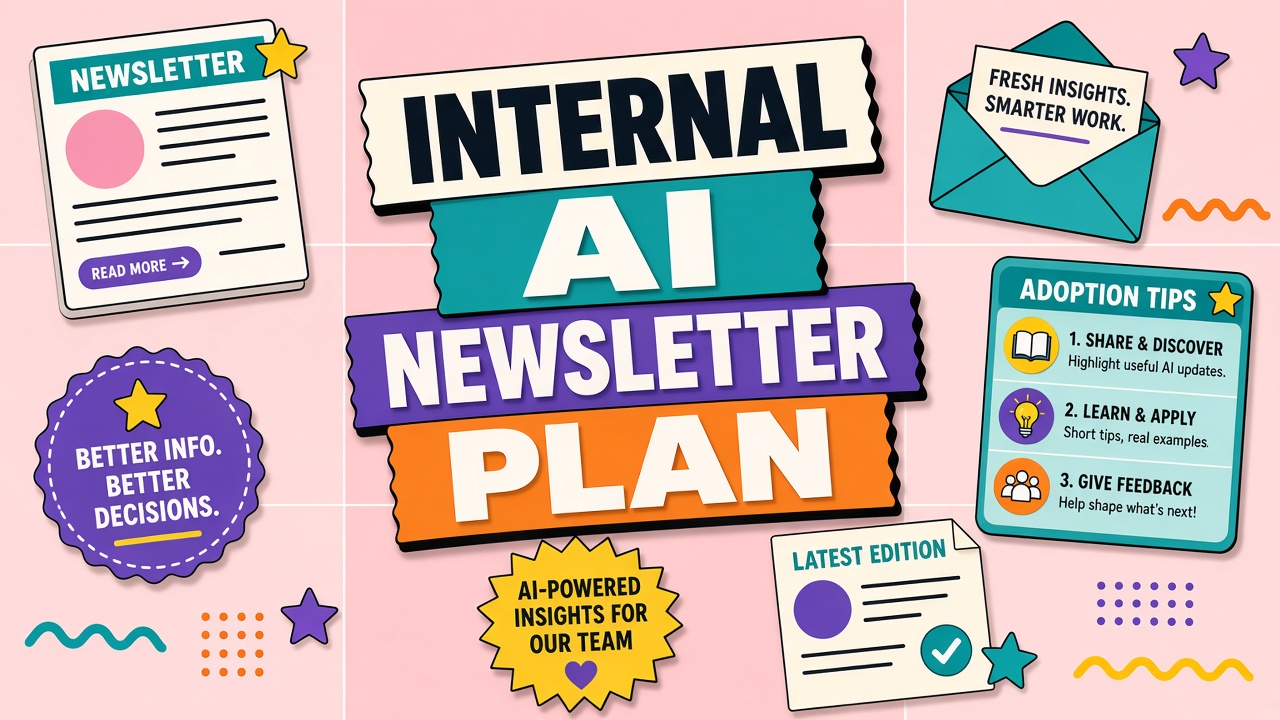
An internal newsletter content plan for AI adoption keeps momentum with monthly policy updates, practical tips, measured wins, and expert Q&A. This guide outlines editorial sections, a 12-month skeleton, story sourcing, and metrics for teams rolling out AI marketing and AI writing tools company-wide.
Build a contributor guide with word limits, redaction rules, and banned phrases ("revolutionary," "magic," unchecked ROI). Contributors fill templates; editors polish for tone. Templates speed champion submissions and reduce legal review rework.
Track which departments never appear in tips. Silent departments may lack champions or may not find tools relevant. Outreach beats assuming disinterest; sometimes policy blocks adoption and the newsletter surfaces the blocker for steering action.
Sections: Policy, Tip, Win, Ask-an-Expert
Repeatable sections reduce blank-page fatigue. Each issue should fit on one scrollable email or intranet post (roughly 600 to 900 words total).
- Policy pulse (150 words): One change or reminder from legal or security, linked to full policy
- Tip of the month (200 words): Concrete workflow from a champion with screenshots redacted
- Measured win (150 words): Before and after metric with caveats, never vanity claims
- Ask-an-expert (200 words): Answer two employee questions submitted via form
- Approved tools snapshot: Link to catalog; highlight one new approval or sunset
Rotate deep dives quarterly: subprocessors, data tiers, or how writing assistants fit brand guidelines.
Keep a style guide appendix for newsletter authors: plain headlines, no exclamation stacks, cite metrics with footnotes linking to internal dashboards. Consistency builds trust faster than flashy one-off issues.
Sourcing Stories From Champions
Workflow champions in each department owe one tip or win per quarter. Program admin runs a light interview (15 minutes), drafts the copy, and sends for champion approval before publish.
Pay contributors with recognition, not gimmicks: executive shout-out, conference budget, or priority access to pilot tools. Avoid leaderboards on raw AI usage volume; reward quality and policy-compliant examples.
Maintain a story bank spreadsheet: champion name, workflow, metric, approval status, publish month. When open rates dip, pull a ready win rather than skipping the win section. Interview questions should extract constraint and caveat ("works for internal drafts only") not only hero outcomes.
Measuring Open Rates and Tool Uptake
Track email open and click rates if your intranet allows. Correlate issue themes with active seat usage and support ticket volume the following month. A spike in "how do I log in" clicks after an SSO article means the tip landed.
| Metric | What it indicates |
|---|---|
| Open rate trend | Subject lines and send time fit audience |
| Policy link clicks | Employees seek authoritative source after reminders |
| Active users vs seats | Tips convert to sustained use, not one-week spikes |
| Incident reports after issue | Policy section may need clearer wording if misuse rises |
Avoiding Hype and Unverified Claims
Internal comms set cultural norms. Ban superlatives without data ("10x productivity overnight"). Require wins to cite measurement method and scope (one team, six weeks, internal metric). Legal should quick-review issues that mention customer data or regulated use cases.
When highlighting marketing AI campaigns, separate internal efficiency gains from external performance claims verified by analytics.
When sharing tips involving AI writing tools, redact client names and proprietary prompts. Internal newsletters still leak if forwarded externally; treat every issue as potentially public.
12-Month Editorial Calendar Skeleton
January: acceptable use refresh and login tips. February: data tier reminders. March: Q1 win story. April: tax-season or peak workload workflows. May: security awareness (phishing plus AI). June: mid-year tool catalog update. July: vacation coverage workflows. August: back-to-school ramp for education customers if relevant. September: budget and renewal preview. October: incident learnings (anonymized). November: gratitude and champion awards. December: year in review and next-year roadmap teaser.
Adjust themes to your fiscal calendar and industry peaks. Keep policy pulse every month even when other sections rotate.
Distribution Channels and Accessibility
Email works for desk workers; frontline teams may need Slack, Teams, or intranet home page cards. Publish an archive with search so new hires catch up without twelve forwarded threads. Ensure readable contrast and alt text when screenshots illustrate tips.
Segment optional deep links by role: engineering eval tips versus marketing AI campaign workflows. One newsletter shell with role-specific inserts beats separate publications nobody maintains.
Editorial Governance and Approval
Assign editor (program admin), legal reviewer for policy pulse, and executive sponsor for opening note quarterly. SLA: draft five days before send, approvals two days before, no Friday afternoon policy surprises. Version each issue in wiki with change log when post-send corrections occur.
Recycle evergreen policy pulse content with fresh examples rather than rewriting from scratch monthly. Rotate incident learnings anonymized across quarters so themes reinforce without repetition fatigue. Link each policy pulse to the canonical wiki section, not orphaned PDFs.
New Hire and Role Change Onboarding
Include the last three newsletter issues in new hire AI onboarding packets. Role changes (support to sales) trigger targeted resend of relevant tip archives. Onboarding completion metrics pair with seat activation to spot teams that have licenses but no guidance.
Crisis Communication in Newsletter
When AI incidents affect employees or customers, the newsletter may carry approved holding language after legal sign-off. Silence during incidents lets rumor fill the gap. Crisis sections should link to official status pages and avoid speculative root cause until confirmed.
Post-incident issues explain policy updates resulting from learnings without blaming individuals. Employees learn more from anonymized failure stories than from generic "remember policy" reminders alone.
Coordination With L and D
Partner with learning and development so newsletter tips appear in formal training modules. Employees who complete LMS courses on AI policy then see newsletter examples reinforcing the same behaviors. Misalignment between LMS and newsletter confuses new hires.
Schedule newsletter sends after major LMS updates so policy pulse references current course names and links, not retired modules.
Frequently Asked Questions
Should contractors receive the newsletter?
Yes if they use company AI tools or handle company data. Use the same policy sections; segment tips that assume full-time employee systems if contractors have different access.
How do we serve multilingual staff?
Publish core policy pulse in all supported languages; tips can rotate languages monthly if translation capacity is limited. Link to translated policy PDFs, not machine-translated tips without review.
Is monthly enough?
Monthly is the default cadence for most orgs. Increase to biweekly only during major rollouts; decrease risks fading attention. Consistency beats burst campaigns.
What if open rates are low?
Shorten issues, improve subject lines, move distribution to Slack or Teams with email archive, and survey employees on format preferences. Low engagement may also mean tools are not relevant to large segments; segment content by role.
Executive Sponsor Messages
Quarterly notes from the executive sponsor reinforce that AI adoption is strategic, not experimental chaos. Sponsors should acknowledge policy constraints explicitly to legitimize compliance sections employees might otherwise skip.
Avoid sponsor messages that contradict policy pulse in the same issue. Mixed signals destroy newsletter credibility faster than low open rates.
Highlight cross-functional wins where marketing AI and legal collaborated on compliant campaign drafts. Stories that show partnership beat tool feature lists for sustained adoption.
Accessibility and Inclusion in Comms
Use descriptive link text instead of "click here" for policy references. Provide text summaries of screenshot tips so screen reader users receive the same guidance. Inclusive comms reduce adoption gaps between desk and field teams.
When featuring non-English workflows, note translation review status. Machine-translated tips without human review should not ship in languages your legal team cannot assess for policy accuracy.
Archive and Search for Newsletter
Maintain a searchable archive tagged by topic: policy, tip, win, tool name, department. Search helps employees find guidance during incidents without paging program admin. Tags also reveal content gaps when search analytics show repeated failed queries.
Survey readers twice per year on format preference: email length, Slack vs intranet, video tips vs text. Adapt format without dropping policy pulse monthly cadence.
Invite legal to pre-review annual issue themes touching regulated industries if your customer base spans healthcare, finance, or public sector segments.
Track contributor diversity so one department does not dominate tips. Dominance signals missing champions elsewhere or editorial bias that reduces relevance for large employee segments.
Program admin should maintain editorial calendar six months rolling with owner names per issue. Rolling calendar prevents month-end scrambles and gaps during PTO.
Measure newsletter impact on policy acknowledgment rates where intranet tracking exists. Low acknowledgment after policy pulse issues signals need for shorter copy, mandatory read receipts, or manager reinforcement in team meetings.
Archive each issue in searchable HTML with stable URLs so intranet search surfaces past tips. Stable URLs also let champions link newsletter guidance from team wikis without broken links after email archive migrations.
Track which departments never submit tips and run targeted champion outreach. Silent departments often lack a named champion rather than lacking relevant AI use cases.
Send a one-question survey after each issue asking whether readers applied a tip that week. Responses guide editorial focus better than open rates alone.
Communicate Monthly, Adopt Continuously
Internal newsletters turn AI governance into a conversation employees expect. Standardize sections, mine champions for stories, measure uptake, and refuse hype. Teams deploying marketing and writing tools should schedule the first twelve issues before go-live, not after adoption flatlines.