What is Mify?
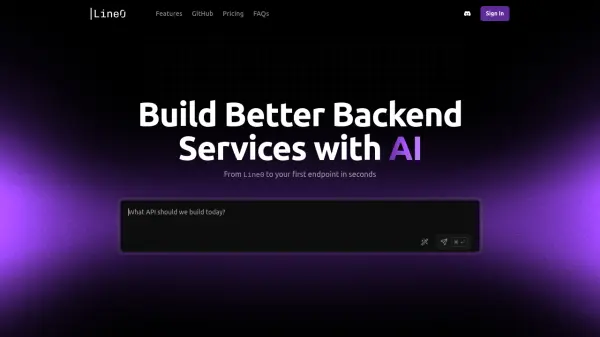
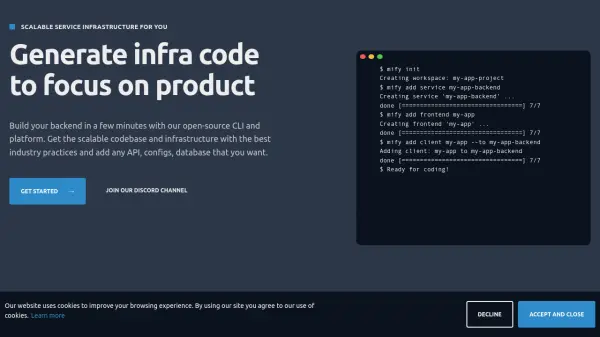
Mify empowers developers to build backend infrastructures in minutes using its open-source CLI and modern platform. By generating production-grade, scalable codebases and infrastructure as code, users can efficiently orchestrate services, frontends, and APIs with support for multiple languages and frameworks. Designed with best practices at its core, Mify streamlines the often complex process of backend setup, allowing users to add APIs, configurations, and databases without manual integration.
The tool leverages OpenAPI schemas to automate connections between components, ensuring frictionless communication and easy integrations. Built-in support for features such as authentication, structured logging, and managed CI/CD further simplifies service orchestration. Mify’s generated code is fully owned by the user, and its monorepo approach fosters efficient team collaboration, making it ideal for scalable and maintainable software projects.
Features
- Infrastructure Code Generation: Quickly generate backend and infrastructure codebases.
- OpenAPI Integration: Automate service connections and API definitions using OpenAPI schemas.
- Multi-language Support: Scaffold services in a variety of programming languages.
- Open-source Platform: All generated code is fully owned and modifiable by the user.
- Managed CI/CD: Build and deploy services without manual configuration.
- Authentication and Logging Components: Easily set up authentication, metrics, and structured logging.
- Monorepo Collaboration: Designed for streamlined team collaboration within a monorepo structure.
Use Cases
- Rapidly scaffolding backend infrastructure for new applications.
- Automating generation of code for APIs, services, and frontends.
- Maintaining scalable codebases with modern industry standards.
- Setting up integrated authentication, logging, and metrics in projects.
- Accelerating prototyping and reducing time-to-market for software startups.
- Simplifying multi-language service orchestration in complex environments.