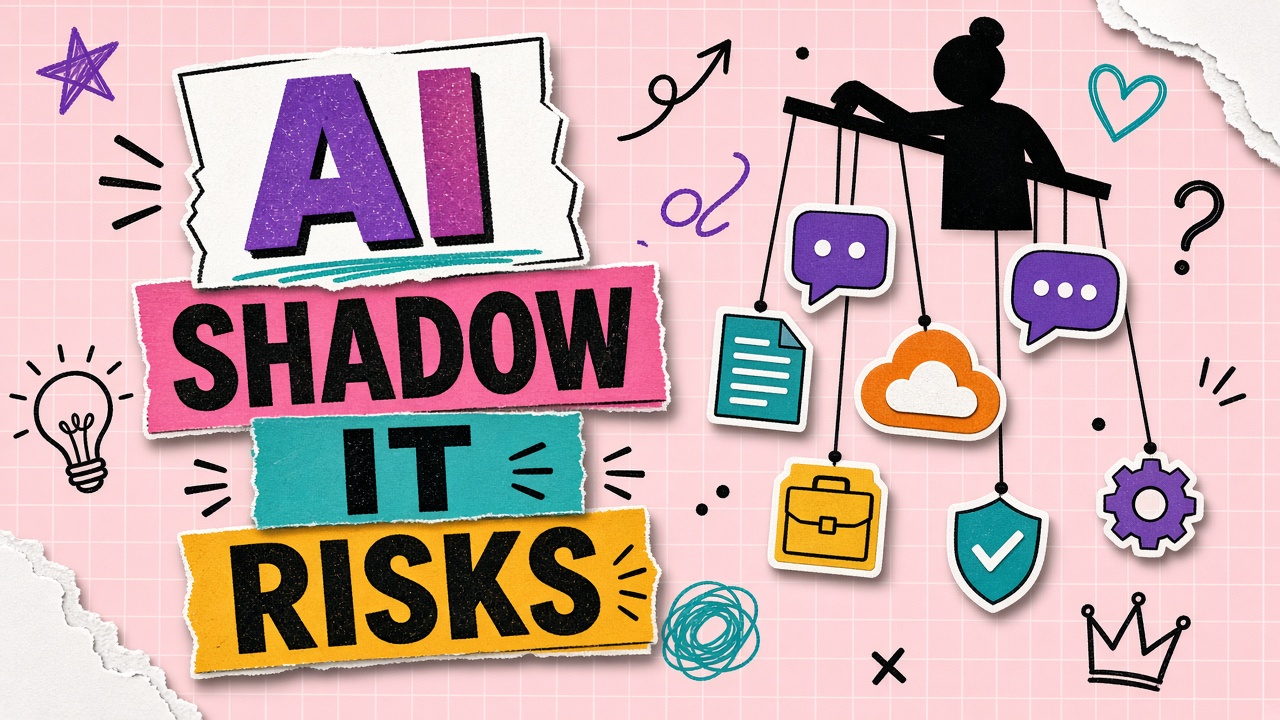
Your team already uses AI tools you have not approved. Marketing tests a new image generator. Engineering pastes logs into a free chatbot. Sales installs a browser extension that summarizes CRM pages. This is shadow AI at work: fast, useful, and invisible to security until something goes wrong. Understanding AI shadow IT risks helps leaders govern adoption without pretending blocklists alone will work.
This guide defines shadow AI with concrete examples, maps data leak paths, lists detection signals, and proposes a governance framework centered on approved catalogs and fast-track requests. Pair it with approved AI productivity and AI chatbot options that are easier to use safely than risky shortcuts.
Shadow AI Defined With Common Examples
Shadow AI is any AI tool used for work without IT, security, or legal review. It includes consumer accounts, personal credit cards on pro plans, browser extensions, and mobile apps that never appeared in procurement.
Common examples:
- Free chatbot tabs for drafting emails containing customer names
- Personal subscriptions to writing assistants billed as expenses
- Chrome extensions that send intranet page text to unknown backends
- No-code automations piping Slack messages into public APIs
- Mobile AI apps processing photos of whiteboards with roadmap details
Data Leak Paths Through Consumer AI Tools
Unapproved tools leak data through predictable paths.
| Leak path | How it happens | Detection signal |
|---|---|---|
| Training retention | Consumer tier allows model improvement from prompts | Policy audit finds no enterprise DPA |
| Shared chats | Public link or workspace misconfiguration | External referrer or leaked URL in ticket |
| Extension exfiltration | Full page sent without user awareness | DNS to unknown AI domains from endpoints |
| Orphaned accounts | Departed employee personal login still active | No SSO offboarding coverage |
| API keys in repos | Developer tests with production key in git | Secret scanning alerts |
Detection: Network, DNS, Expense Anomalies
You cannot secure what you cannot see. Practical detection layers for unapproved AI tools risk:
- DNS and proxy logs: Queries to known consumer AI domains from corporate networks
- CASB / SSE: Cloud access security brokers flag unsanctioned SaaS logins
- Expense reports: Recurring small charges to AI vendors not on vendor list
- Browser management: Inventory of installed extension IDs
- Employee surveys and office hours: Qualitative signal of tools security tools miss
- DLP alerts: Large paste events to AI domains (where DLP supports it)
Detection is not punishment. Use signals to prioritize outreach and fast-track approvals for high-value tools employees already proved they need.
Policy Design: Allow vs Block vs Guide
Effective AI governance employees will follow uses three levers:
- Allow: Approved catalog with SSO, DPAs, and documented data tiers
- Guide: Clear rules for public vs internal data; examples of mistakes
- Block: Technical controls on extensions, unsanctioned domains, and USB exfil where needed
Pure block strategies fail because AI improves productivity. Pure allow-without-review fails compliance. Combine guided policy with frictionless approved paths.
Approved Tool Catalog and Fast-Track Requests
Publish a living catalog: tool name, approved use cases, data tiers allowed, SSO link, owner, and review date. Include a fast-track form for new requests with SLA (for example, five business days) so employees do not default to shadow installs while waiting.
Fast-track intake should ask:
- Workflow description and data classification
- Whether alternatives from the catalog were tried
- Vendor privacy policy and plan tier
- Integration surfaces (API, extension, mobile)
Governance Framework (Not a Tool Blocklist)
A sustainable framework includes executive sponsor, cross-functional review (security, legal, IT, data owners), tiered data rules, training for managers, and quarterly catalog refresh. Measure adoption of approved tools, not just number of blocks issued.
Frequently Asked Questions
How do BYOD and remote workers affect shadow AI?
Personal devices bypass corporate DNS and extension policies. Require managed browsers or VDI for regulated data, and focus policy on data tiers rather than device ownership alone.
What about contractors and agencies?
Contractors often bring their own AI subscriptions. Contracts should require use of your approved tools or equivalent enterprise tiers with DPAs, and prohibit uploading your confidential data to personal accounts.
Should we punish employees who use unapproved AI?
Start with education and approved alternatives. Escalate when regulated data was involved or policy was willfully ignored. Blameless post-incident reviews improve reporting.
Does governance slow innovation?
Slow procurement slows innovation. Fast-track SLAs and pre-vetted catalogs speed safe experimentation. Shadow AI feels faster only because risk is hidden, not because governance is impossible.
Can DLP stop all shadow AI?
DLP helps but cannot catch every mobile app or offline local model. Layer technical controls with culture, catalog quality, and leadership modeling of approved tools.
The Bottom Line
AI shadow IT risks grow when approved paths are slower than consumer signups. Map leak paths, detect unsanctioned use without surprise, and replace shadow tools with governed alternatives from your catalog. Browse approved AI productivity and AI chatbot options on EliteAI.tools, then document which tiers and workflows your organization sanctions.